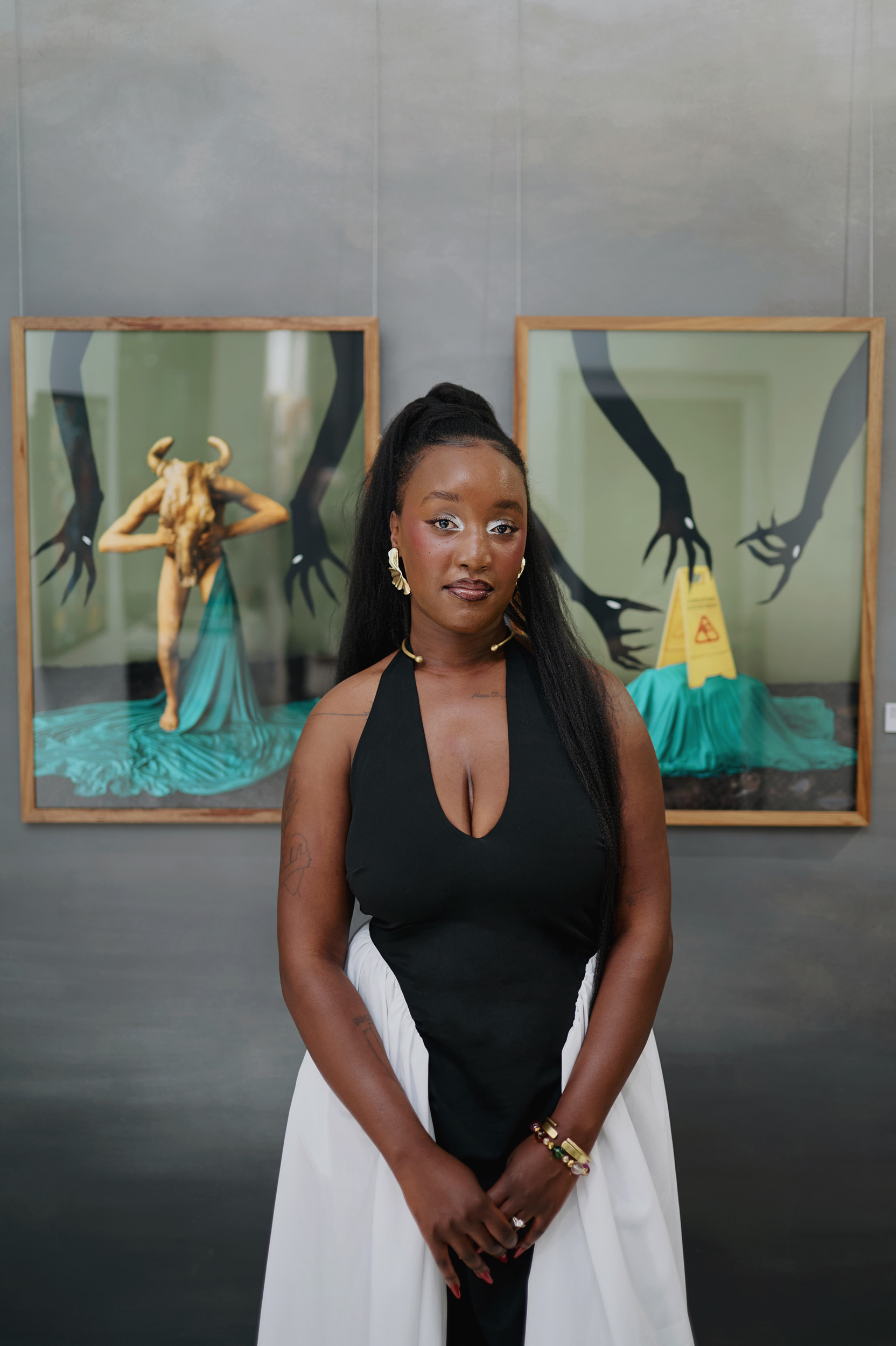
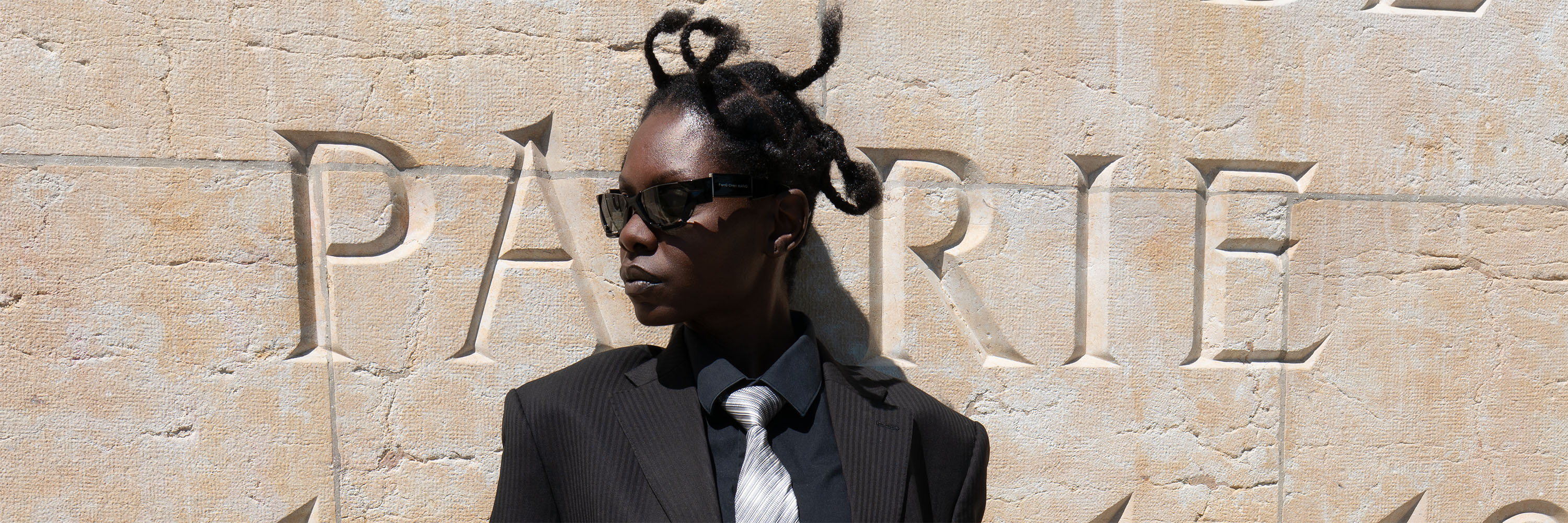
Kenyaa Mzee is honest. Her work, though existing across many mediums and having many faces, holds a consistent quality: acuity. Honesty can be, and mostly is, deeply uncomfortable. In fact, honesty can, as Kenyaa phrased it ‘tear at the fabric of reality’ - it is a confrontation. She said to me “I see how people start glitching when they feel like they have to protect the image that they have created”. I think that truth likes to live in our peripheral vision, we have a vague sense that something is there, lurking, but we cannot turn our head.
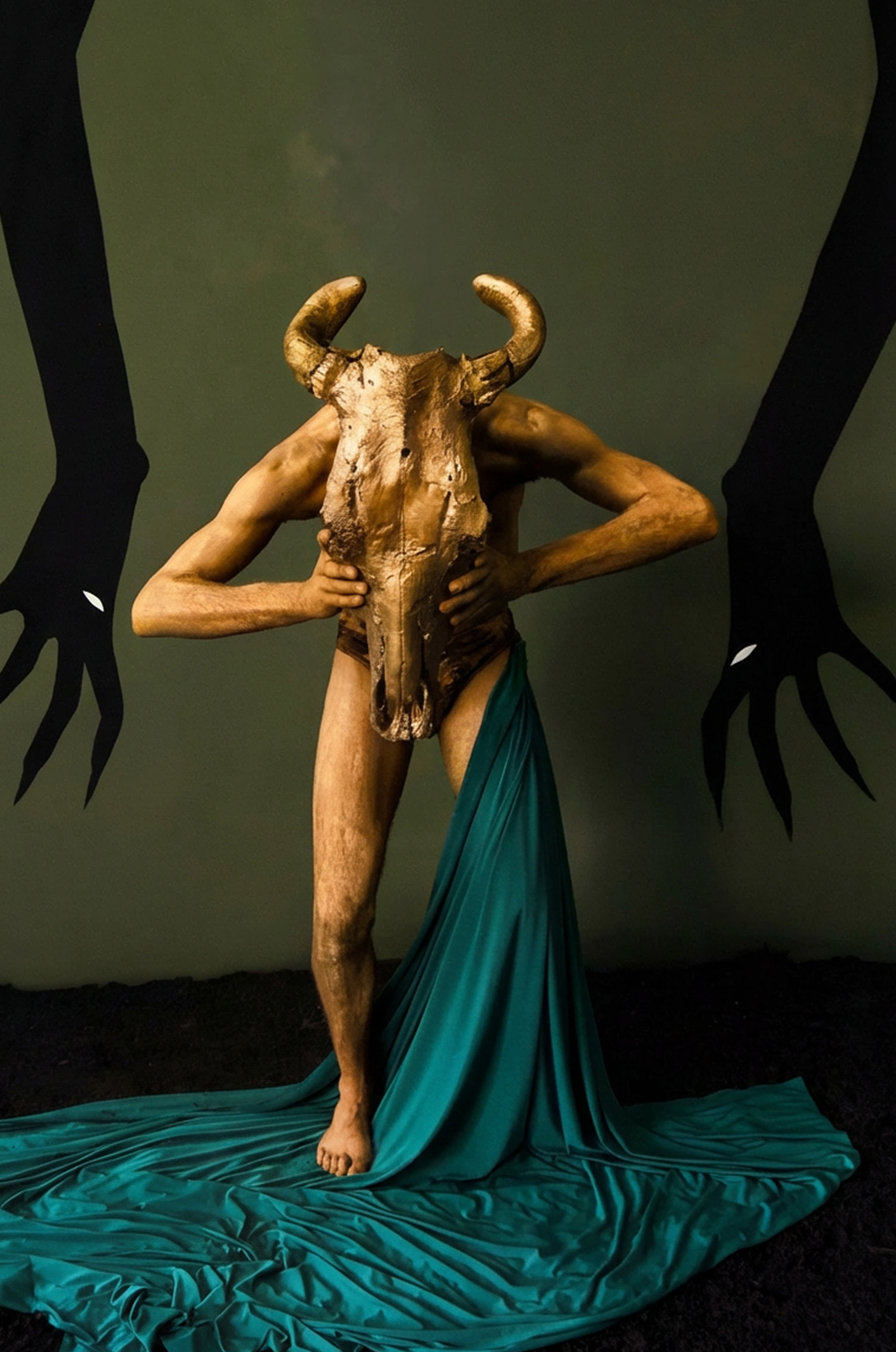
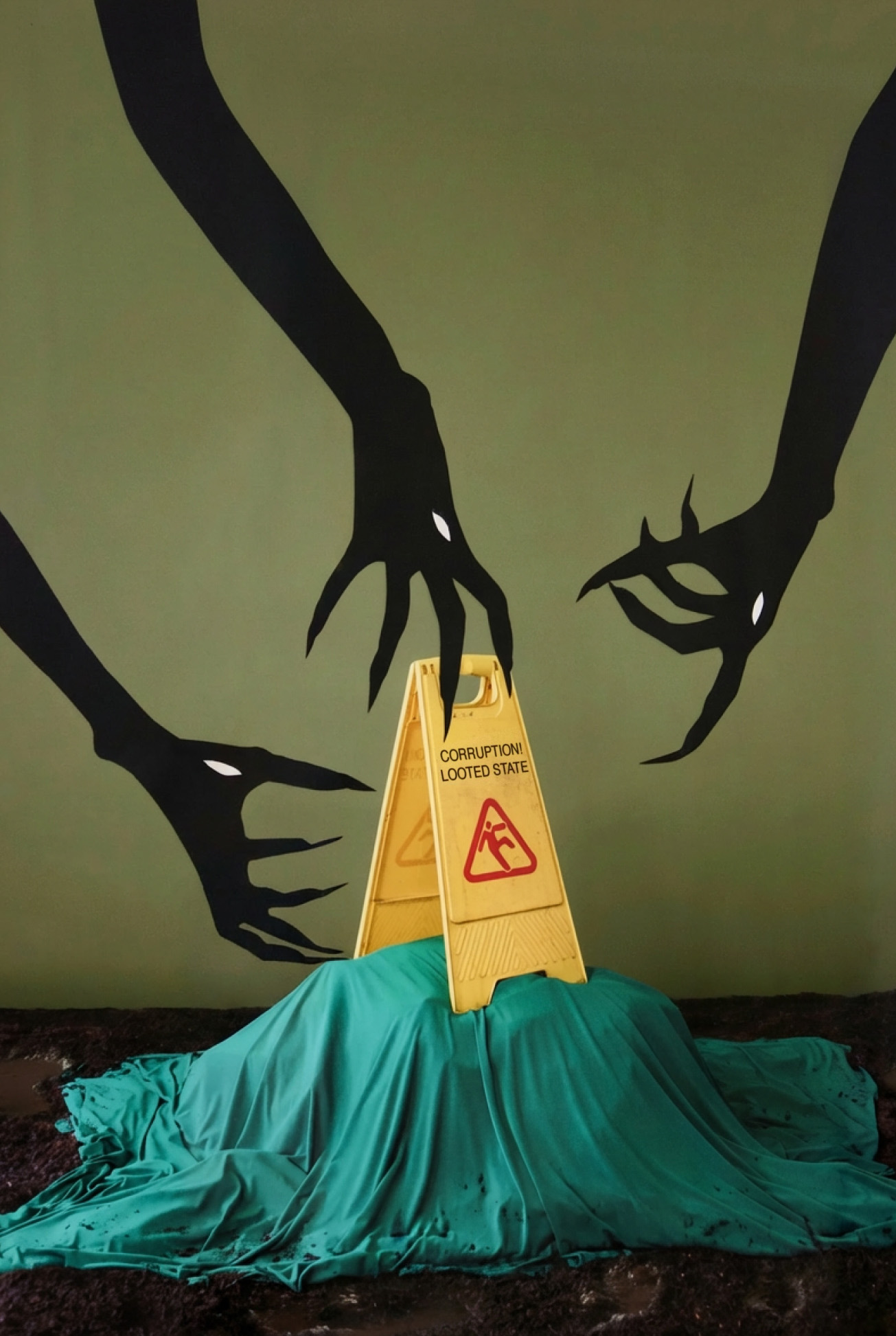
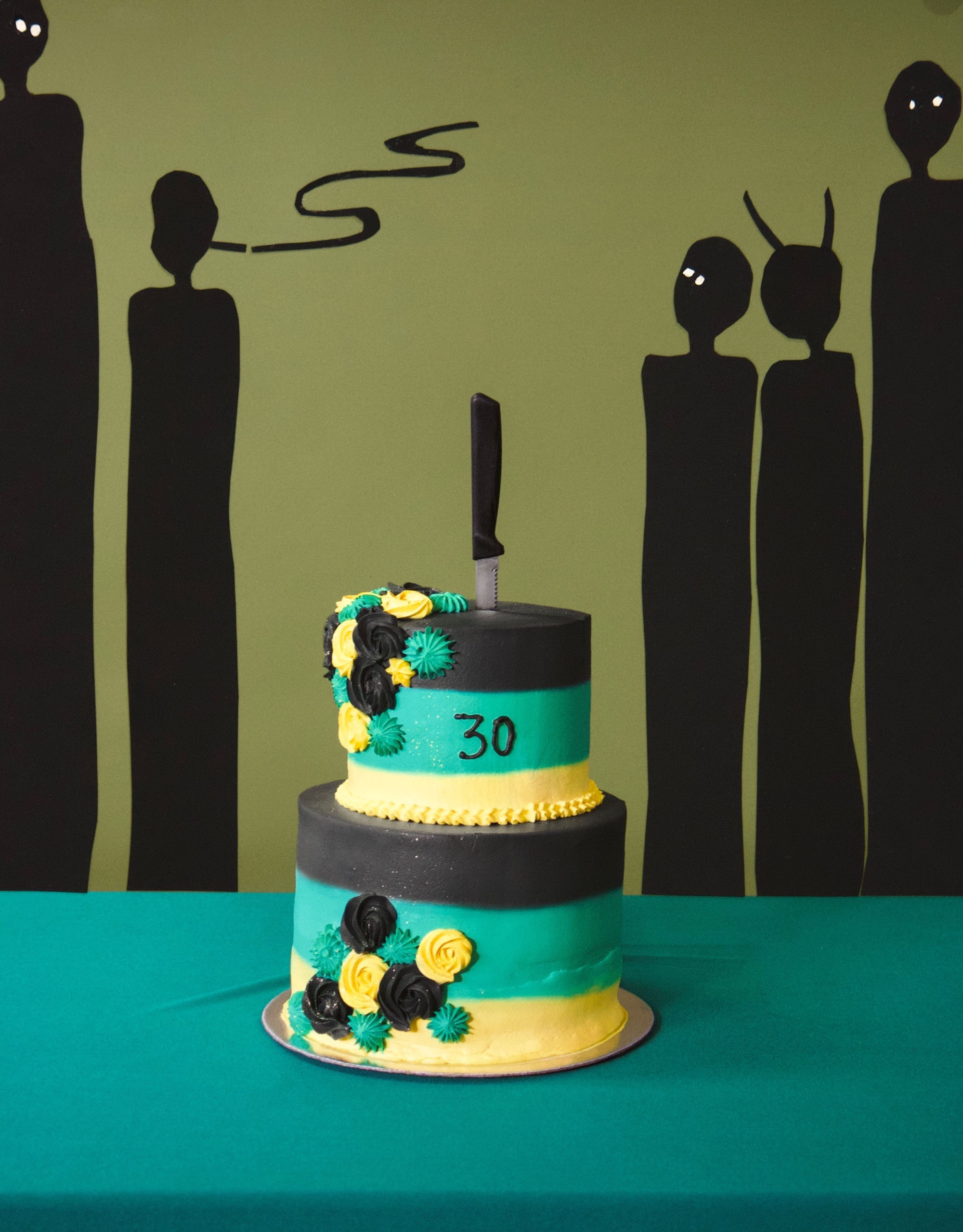
Kenyaa’s exhibition Onye Ji Onye N’ani Ji Onwe Ya expressed heartache, anger and frustration at the extractive and corrupt nature of our political system. The title of the exhibition is an Igbo proverb meaning ‘he who holds another down in the mud must stay in the mud to keep him down’. Her work is politically direct, it does not pander or ponder, it states. Working with photography and textile, a running motif in this body of work is a pair of shadowy phantasmagoric hands that reach into the frame, as you can see in Blue Collar Bouquets and Because Fela Said So. The work deals explictly with state violence, disillusionment and complacency, the ‘sweeping under the rug’ that we do when “we have to protect the image we have created”. Silence and invisibility are powerful tools of coloniality and domination, to feel the creeping sense that there is something there but not being willing to look, plays into these systems.
Kenyaa and I began to speak about honesty not within the systemic context, but within the personal. She said: “you have to face the uncomfortable conversation within yourself or the uncomfortable truth…it is not about perfection it is about honesty”. When we refuse to sit in discomfort or to face reality it becomes very difficult to maintain any kind of accountability within our relationships or experience real reciprocity.
Kenyaa wrote a piece about her friendships with men, and the extractive dynamics she began to recognise as a consistent pattern. She said to me that extraction is about seeing the value in something but not caring for it, not nurturing it. Let’s get simple about this - and slightly biblical – extraction is greed. A Greedy, Hoarding, Entitled act. It destroys and depletes, because there is no return; it has a single direction, no cycle, no ebb or flow. Black womxn particularly face this constant dynamic, expected to give, and give only. This kind of extraction carries itself out in the personal and fractals into the systemic.
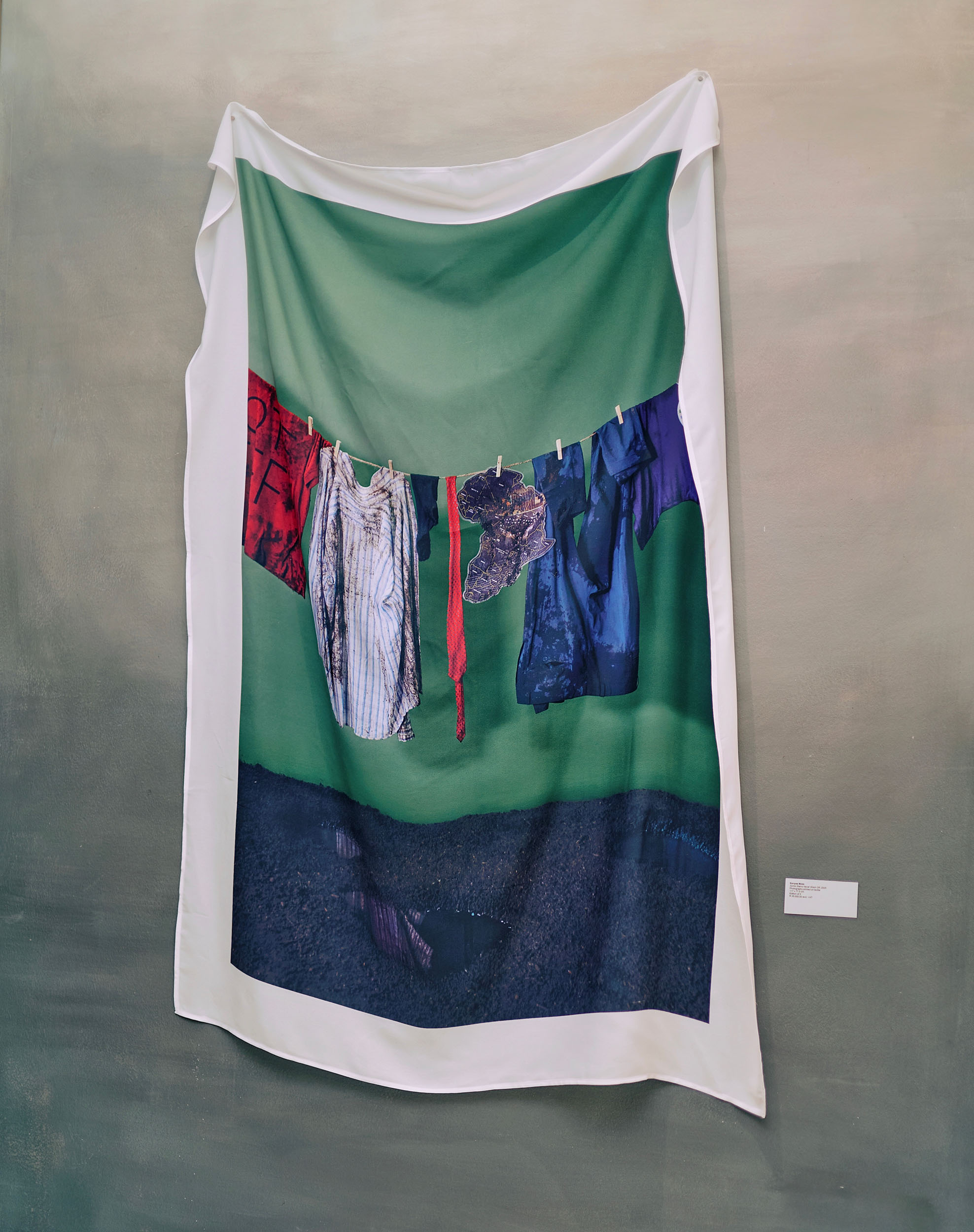
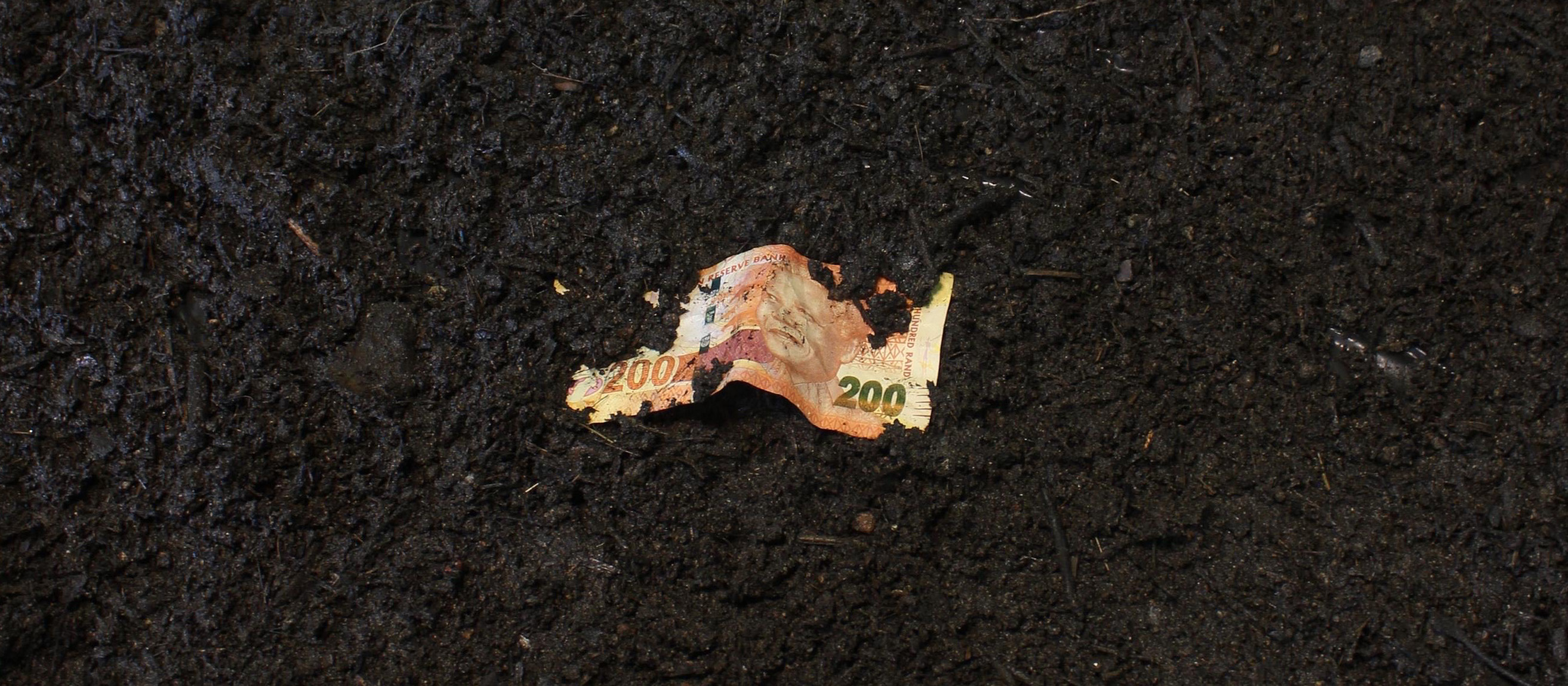
Mining holds a fraught space within South Africa’s past and present – largescale mining began as a colonial project which coerced Black labour in abborent conditions and committed violence against the land. Mining is a synonym for extraction. Mining is a living metaphor for coloniality. Kenyaa’s work makes reference to Mgcineni ‘Mambush’ Noki otherwise known as The Man in The Green Blanket, a thirty-four-year-old father and drill-rock operator who was murdered during the Marikana Massacre. He was one of the strike leaders who initiated a largescale effort to get wages lifted for mine workers. Mambush’s green blanket is used in Kenyaa’s works, such as Marikana Afrikana, as a symbol of a legacy of resistance, and a legacy of senseless violence.
To be frank, legacy feels like a colonial concept, it evokes the constructed grandeur of a rich white man on a plinth standing very-very upright somewhere (looking slightly uninterested yet still imposing and paternal). Although this is the first thing that came to mind for me, talking to Kenyaa shifted my perspective. I don’t think legacy has to mean superiority, or a domination over time via a domination of physical space. I think that legacy can mean kindness. Which, I know, sounds as bland as somebody saying ‘live, love, laugh’ to you, but stay with me here.
Is true legacy held in the oxidised flesh of a copper man? Or is it held in the habits we create that flow far beyond our own lifetime? Kenyaa told me about her family, that there was always a desire to be politically engaged, to understand how to treat people kindly, to be deeply curious. What does legacy mean when it’s not institutional, when it’s not an upholding of a system of power? Can legacy feel soft or kind - a gentle touch from the past? I think so, this is a legacy that is already forming. I think legacy is an alive thing, it has to be right, that’s why it continues to exist. Discomfort in truthfulness is part of this, art changes you as you make it because it is a kind of confrontation with your own reality, it shapes, it tears and re-forms. The process of making is the story (the legacy); if we are to turn our eyes to history, personal or collective, it is not the singular points that matter, it is the continuum. The cascading state of being that forms the waterfall, not the individual molecules of water.
There is an intimacy in creation; it is by its nature a process of understanding, of coming closer to something. Sometimes this closeness is literal, you approach a medium, you feel it in your hands, your mouth enunciates words, you begin to tug at threads - and sometimes it is philosophical or emotional, you near the ledge of truth and peer over, or the dots begin to form a pattern. We get closer to our own voice every time we express a part of ourselves, and we get further from extraction the more we care, and the more we nurture. Kenyaa’s work is honest - at times uncomfortable - it is created by someone with exceptionally clear sight, and a mighty but gentle touch.
*Quotations from personal communication with Kenyaa Mzee.