Estimates suggest that between 274 and 410 million garments are produced globally each day. Assembled in production lines, they move across borders, through ports, into markets, onto bodies, and eventually into used clothing economies. What cannot be worn is resold. What cannot be resold accumulates. The accumulation becomes difficult to manage, difficult to process, and increasingly an ecological catastrophe that is difficult to ignore.
This is the situation Accra is faced with today — often positioned as one of the primary destinations of the global north’s excess. An unequal relation that is important to interrogate, but one that tends to flatten the city into a site of impact rather than a site of response. We rarely hear about the practices, systems, and forms of production emerging from this reality.
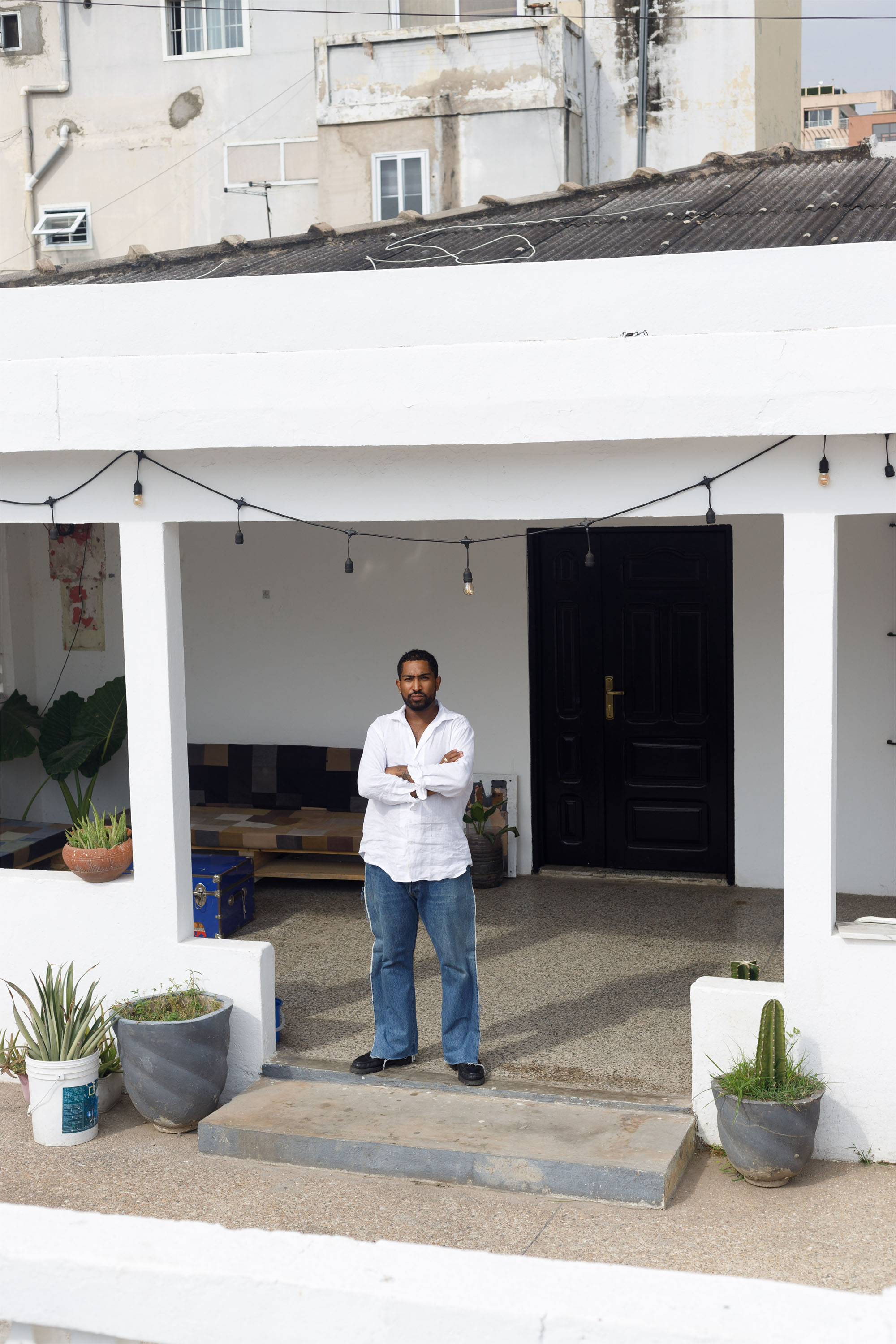
Deadline Factory is one such response. Founded by Manutcher Milani, the project sits within a growing ecosystem of artists, designers, and entrepreneurs in Accra engaging used clothing not only as waste, but as material, as infrastructure and as a site of potential. This ecosystem is shaped by complexity. On the one hand, the import of second-hand clothing has placed pressure on local textile industries, making it difficult to compete with global production systems. On the other, it has generated an entire economy — supporting livelihoods, sustaining markets such as Kantamanto, and catalysing new forms of creativity and production. It is within this tension that Deadline Factory emerges.

Milani, who is Swiss with Iranian and Ghanaian roots, spent the first ten years of his life in Ghana, returning to Accra after studying art at ZHdK in Zurich and completing an BA in Textile Design at Hochschule Luzern. His decision to base the project in the city is tied as much to personal history as it is to what the city offers.
“I feel more purpose, being in Ghana than in Europe. Accra's contemporary art and design story is in development and I want to contribute to that story”.
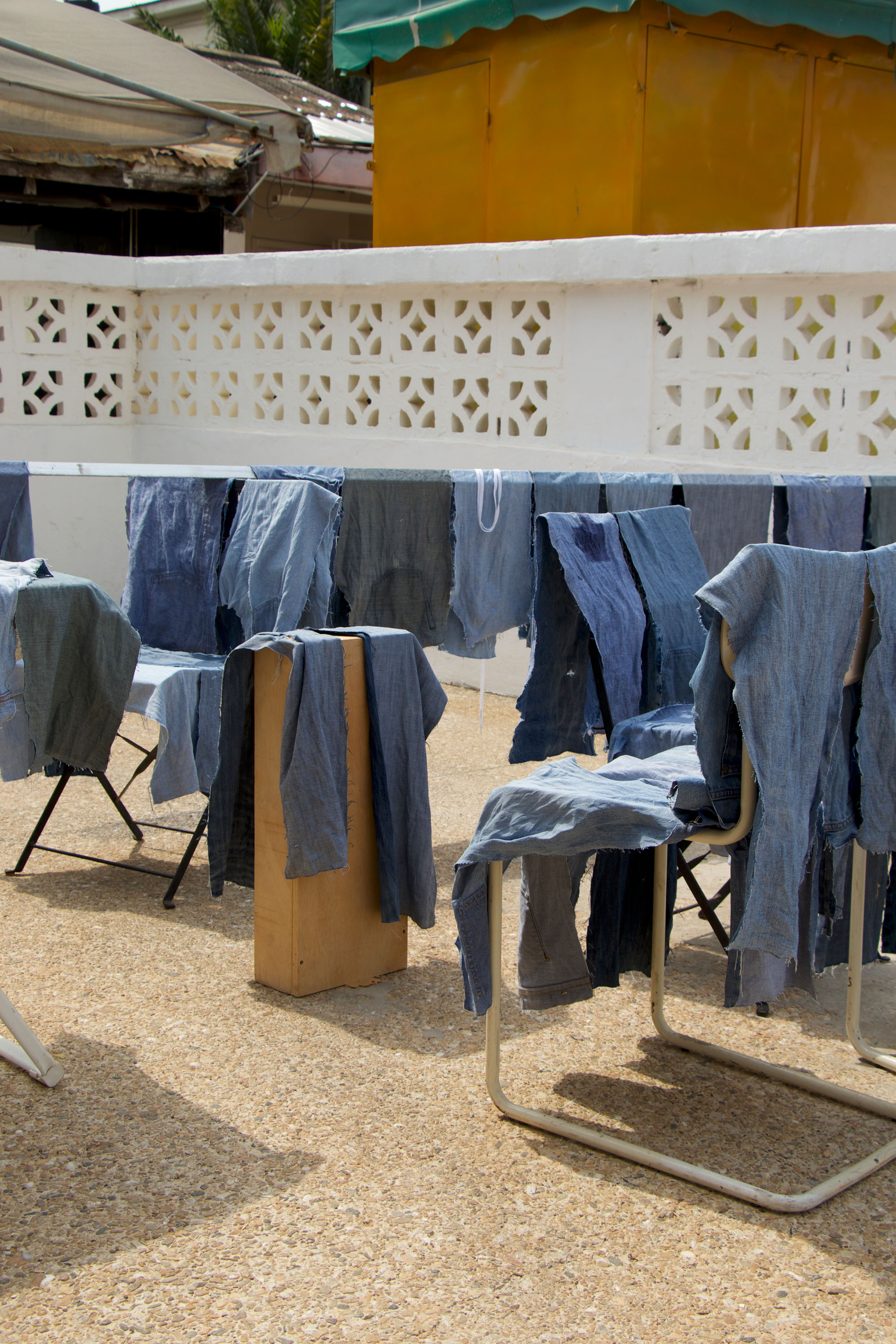
Deadline Factory positions itself as a textile manufacturer. Working exclusively with garments sourced from Kantamanto Market, jeans and cotton shirts are the primary raw materials for Deadline’s textiles. Garments are selected, washed, and taken apart by hand. Seams are opened, panels are separated, and materials are cut into repeatable shapes — strips, squares, triangles and other modular forms. These are then reorganised and sewn together into new fabrics, where structure emerges through the repetition of these shapes.
“I think we have to build all the systems ourselves,” Milani explains.
What is being developed here is not only a product, but a way of working that combines manual processes with an ongoing effort toward systematisation. Decisions around cutting, composition, and construction are tied to efficiency as much as they are to form.
At the same time, the process does not fully abstract the material it works with. The fabrics retain a trace of their previous lives — not always visibly, but materially, and through the labour that reconstitutes them.
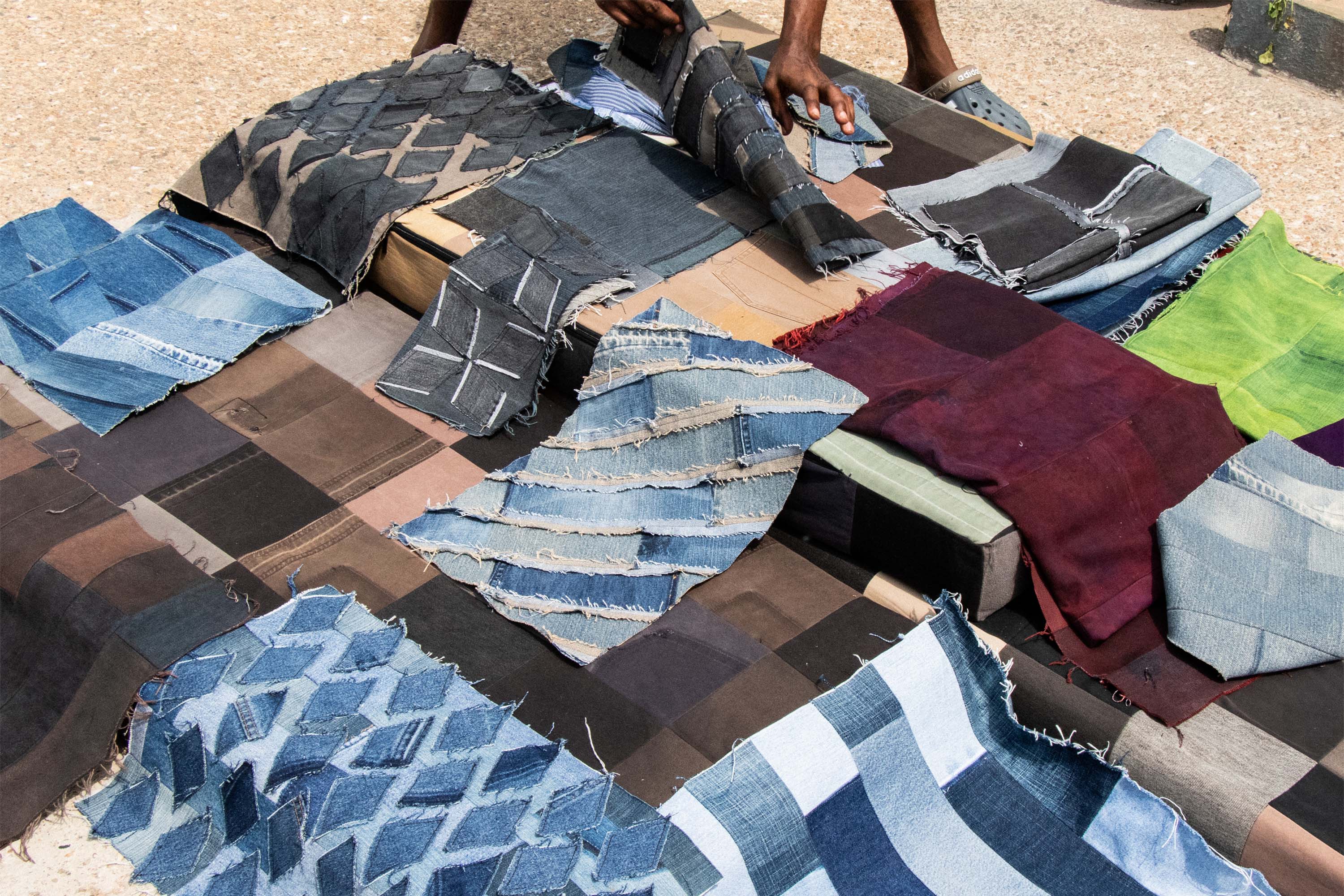
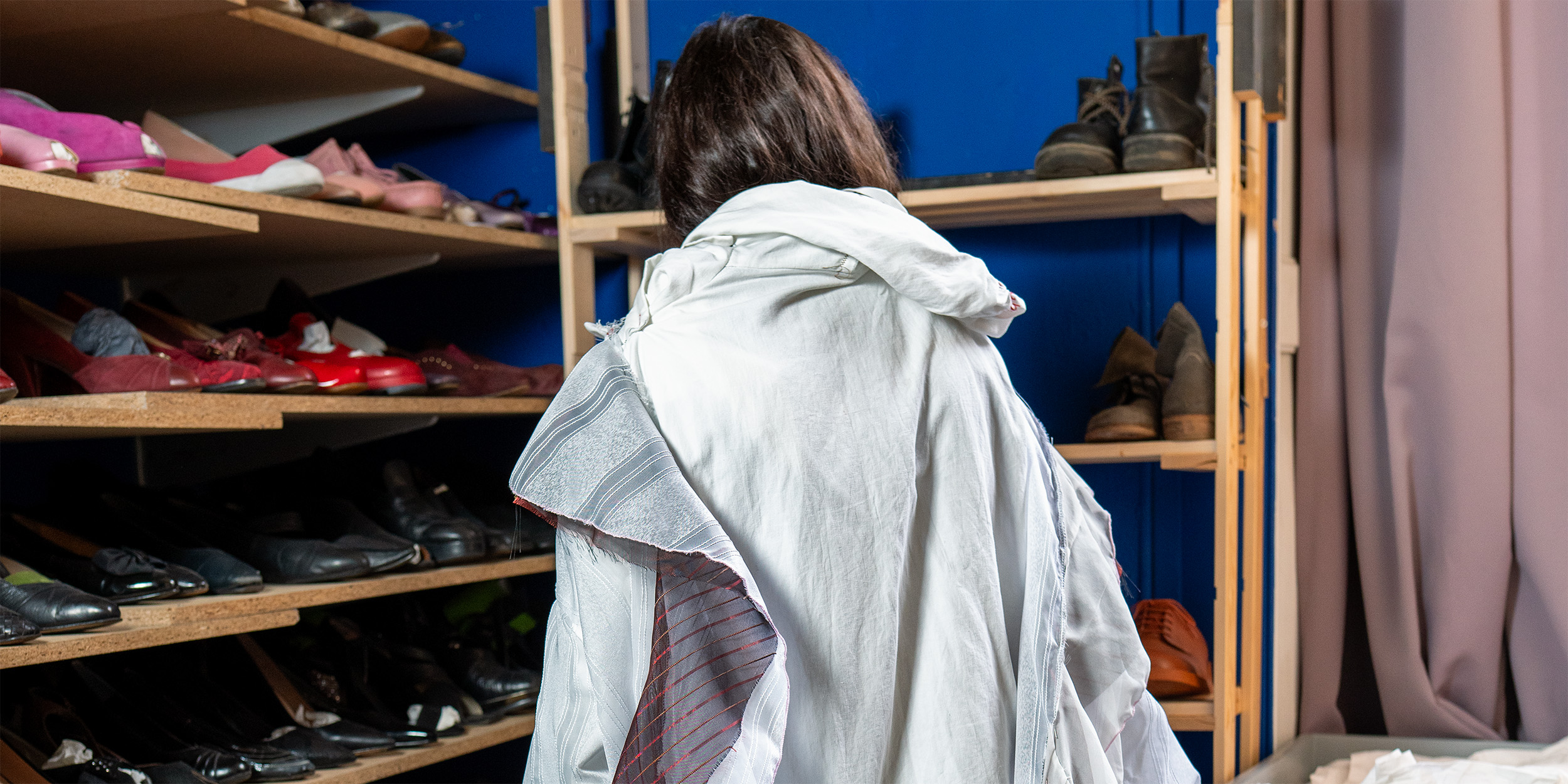
Deadline Factory operates within the broader field of upcycling, but its approach shifts the aesthetic away from visible signs of transformation. Where many practices foreground patchwork, repair, and the recognisable traces of previous garments, Milani is working toward textiles that do not immediately read as upcycled.
“There’s always products where you see it’s upcycling,” he says. “I’m trying to make a product where you don’t see it.”
At the same time, the project remains embedded in the local ecosystem from which it draws its material. Sourcing takes place through weekly engagement with Kantamanto Market, maintaining a direct relationship with the flows of garments and the communities that work within them.
Milani notes, “The only way to create something out of the unusable waste material is through an industrial approach.” In this sense, Deadline Factory reflects a gradual development of textile production — one where new approaches emerge from what is already in circulation, and where the question is not only what to do with used clothing, but how to build the structures that make its transformation possible.