At a time when fashion brands increasingly compete for attention through spectacle, there is something compelling about work that appears to resist the logic of algorithms and the attention economy. Moving between fashion, sculpture and material experimentation, Cement Blanche, the project of Italian designer Francesca M De Giorgio, produces clothing, accessories and objects with a striking physical presence, yet with little interest in explaining themselves.
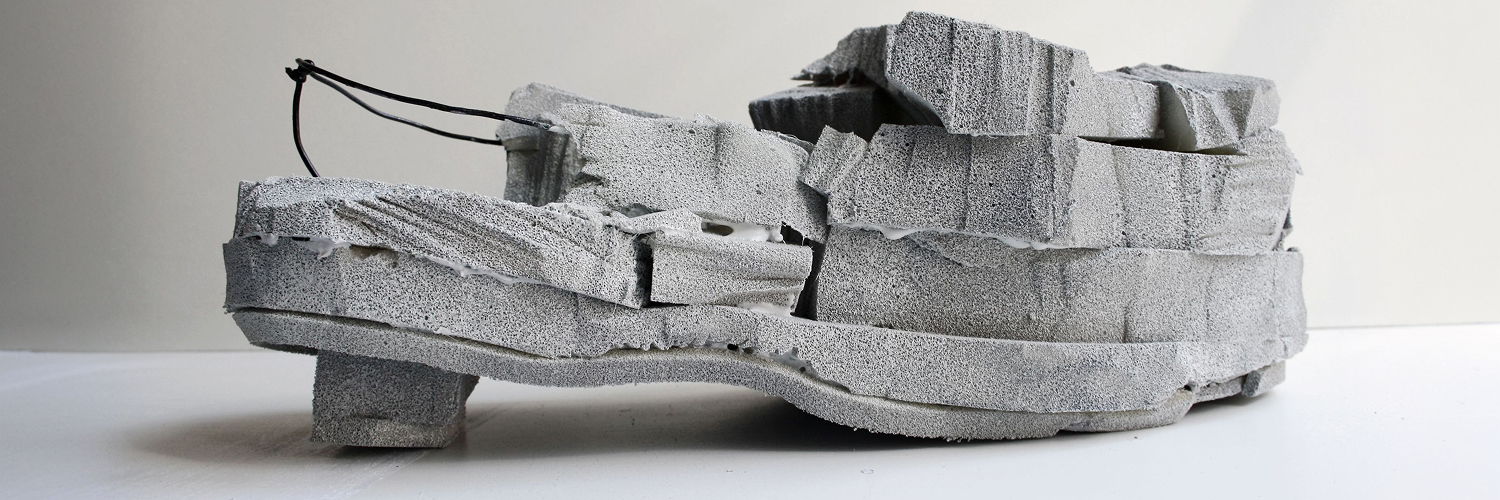
Her pieces carry a raw, restrained and almost brutalist visual language that commands attention without demanding it. The brand's shoes and sculptural objects appear to have been cast from concrete but are, in fact, made from rubber foam. Confronted with these pieces, there is almost certainly a moment when the brain tries to reconcile what the eye is seeing with what the objects actually are, a contradiction that becomes apparent when they are handled or their weight, which is stamped onto their surfaces, is revealed.

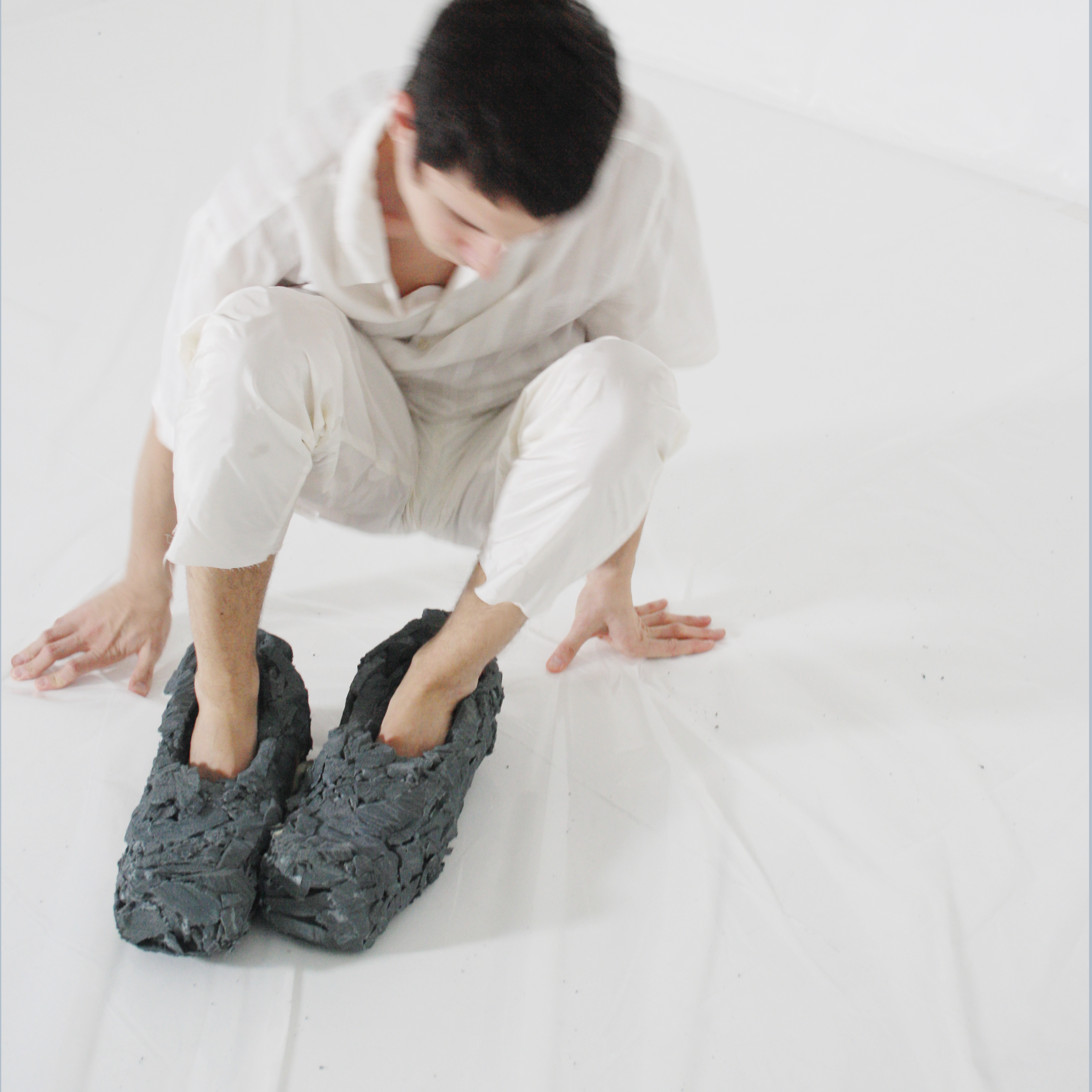
De Giorgio describes her approach as working with materials that mislead perception. Her work could be understood through trompe-l'œil, the artistic technique of deceiving the eye, although she is less interested in reproducing reality convincingly than in exposing the gap between how things appear versus what its like to experience them. For her, the discrepancy between what an object appears to be and what it physically is becomes a way of investigating the different realities people construct through perception.
The concrete aesthetic is deliberate. De Giorgio describes it as a kind of "Brutalist architecture of the object", where the surface is left exposed, without additional decoration. Concrete evokes the permanence and solidity of buildings, while the foam, the actual material, is soft and temporary. Where luxury is often associated with refinement, precious materials and immaculate finishes, Cement Blanche finds its visual force in raw surfaces, exposed construction and the suggestion of industrial materials, giving rise to a kind of brutal luxury.

There are echoes of Maison Martin Margiela's material experimentation and deconstruction, particularly in the willingness to expose a garment's construction. This is most evident in the brand's wire structures, which resemble the exposed skeletons of garments. De Giorgio describes wanting to bring garments to their "zero level", imagining the wardrobe as a series of changing layers built upon an underlying structure.

Seen alongside the foam objects, the wire pieces introduce an interesting relationship between surface and structure. The foam appears solid despite its lightness, while the wire reveals a framework without the surfaces that would usually complete it. Both unsettle our expectations of what makes an object recognisable.
"My work is an open question rather than a definitive answer," De Giorgio explains. The material contradictions are therefore more than visual tricks. They disrupt the certainty with which we ordinarily identify and categorise things, creating space for other interpretations to emerge.

It is here that the work's relationship to presence becomes particularly interesting. In much of contemporary fashion, visibility is carefully constructed through branding, campaigns, spectacle and the narratives attached to garments. Objects are often accompanied by an extensive machinery of communication that tells us what they represent, why they matter and how they should be understood. Cement Blanche seems to operate differently. Its objects have a distinct visual identity, but they leave much of their meaning unresolved.
"I've always believed in the power of silence," De Giorgio explains, suggesting that allowing another person to finish a sentence in their own way can be more interesting than declaring its entire meaning. The object offers something, but the person encountering it must participate in making sense of it. A surface that looks like concrete might evoke a building, strength or permanence for one viewer, while its unexpected lightness might suggest fragility or instability to another.
This openness to interpretation also informs De Giorgio's treatment of weight. Some of the objects are marked with their actual physical weight, a seemingly straightforward piece of information that sits uneasily alongside their deceptive appearance. The number offers something measurable and factual, even as the object's surface suggests an entirely different physical reality.
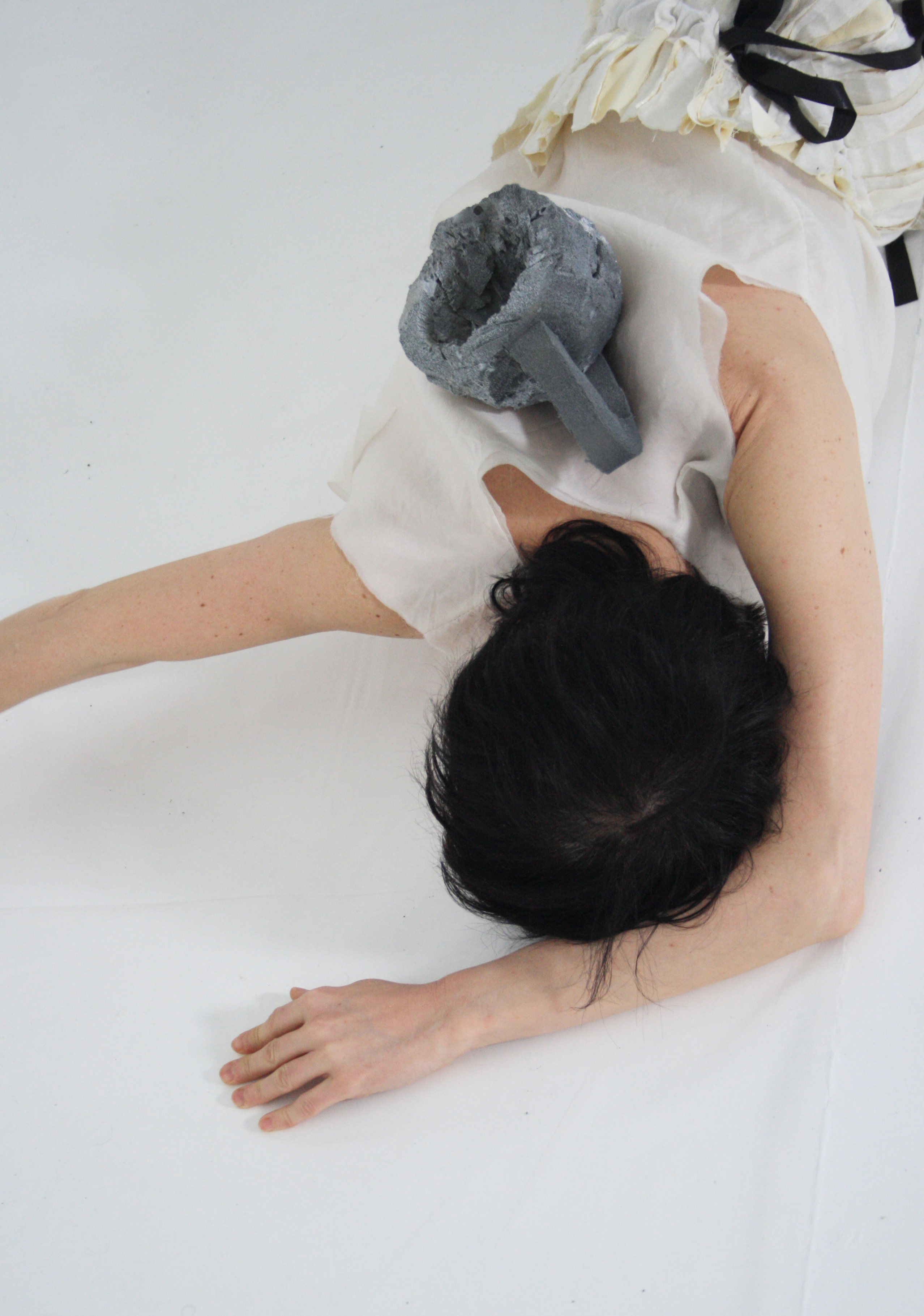
By turning an object's actual weight into a printed motif, De Giorgio transforms objective information into a visual element. There is an interesting tension between this transparency and the way her materials deliberately challenge our expectations. The weight is declared openly, while the object itself appears to be made from something entirely different. A factual measurement becomes part of the object's aesthetic identity, yet even this information cannot tell us what the object means or how it might be perceived. Its emotional, cultural or social weight remains impossible to calculate.
The same thinking informs De Giorgio's refusal to define her practice exclusively as fashion, sculpture, costume or design. "I believe that certain labels can be limits to new possibilities," she says. Working between disciplines allows her to follow questions about bodies, materials and perception without requiring a predetermined commercial or functional outcome.
In a fashion landscape where so much energy is devoted to being seen and understood in particular ways, Cement Blanche offers a different kind of encounter. Its concrete-like surfaces conceal unexpected softness, its wire structures suggest garments still in the process of becoming, and its weight labels reveal how little a measurement can tell us about an object's significance. The pieces take up space, but leave room for the viewer to decide what they mean. They possess presence without needing to have the final word.