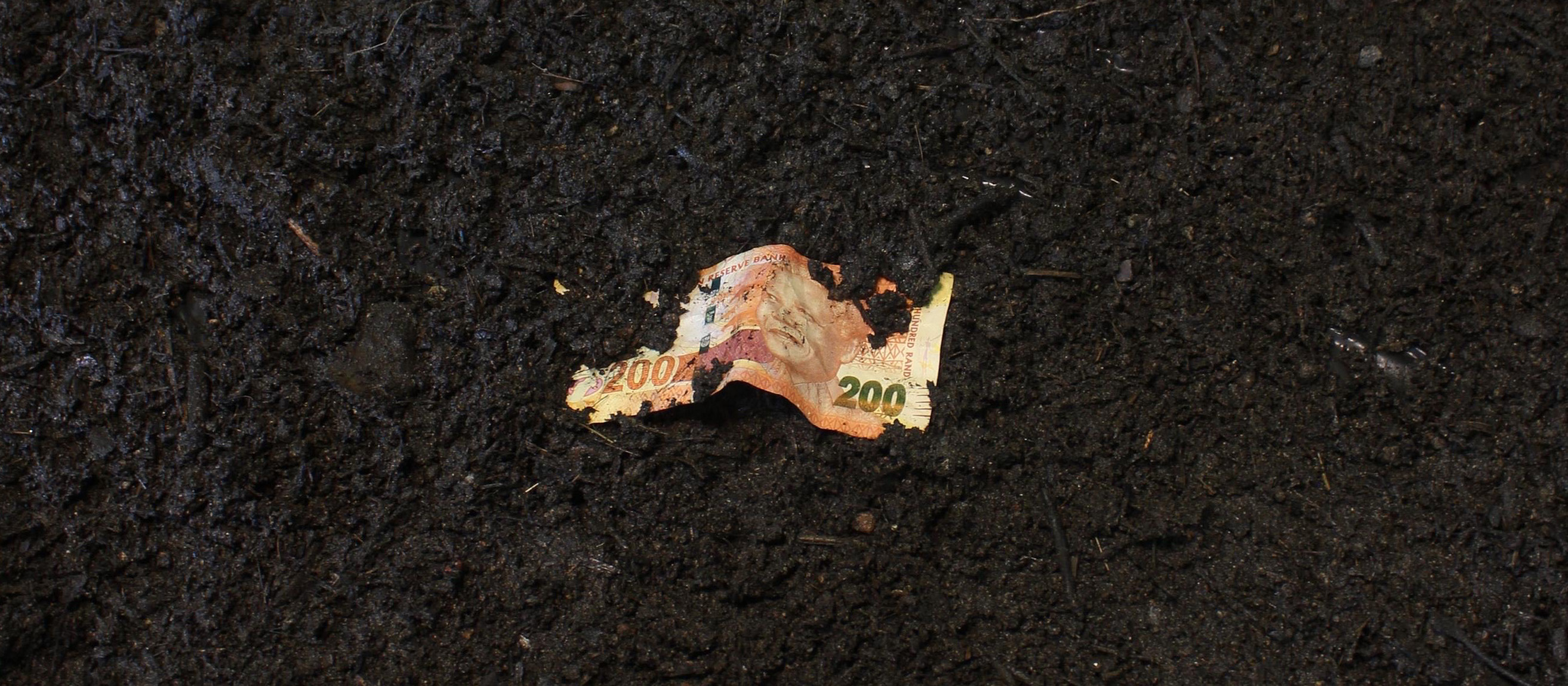
In December 2012, upon returning from the finals of Jeunes Talents Valaisans (Young Talents of Valais), Chance Sayela throws the envelope she receives at the ceremony into the trash. She is convinced it contains nothing more than a certificate, and she has no interest in a piece of paper. The next day, her younger sister, Elisabeth, retrieves the envelope, intending to have it framed. Inside, she discovers a check for 500 Swiss francs—an amount that allows Chance to pay for her first dance lessons.
While the story may seem like a happy coincidence, in hindsight, it appears to mark the true beginning of her artistic journey.
A few months earlier, the two sisters audition for Jeunes Talents Valaisans in Sion, in the Swiss canton of Valais. Chance, fourteen, dances. Elisabeth, ten, creates the mixes that accompany her sister’s performances. Together, they embark on an adventure that takes them, over the course of nearly a year, from one round of auditions to the next. The trips multiply, as do the rehearsals. On the night of the finals, Chance performs a hip-hop routine in front of the audience and the judges. At the end of the competition, she finishes in second place. The ranking matters less than what it already reveals: for the first time, dance opens up a real opportunity.

The years that follow are entirely devoted to dance. Chance trains at several schools, refines her technique, and gradually develops her own style. Rehearsals set the pace of her weeks. Over time, hip-hop gives way increasingly to krump, a dance style born in Los Angeles, in which anger, joy, and pain become the fuel for movement. In it, she finds a raw intensity that comes closer to what she is seeking to express.
Dance also becomes a place of belonging. The studios, rehearsals, and encounters she experiences there shape a kind of chosen family. Until the day that promise begins to crack. After joining a fam—a krump dance crew—Chance is confronted with physical and psychological abuse. Faced with a climate of injustice and the silence of those around her, she makes a radical decision: to stop dancing. Overnight, she distances herself from a world to which she has devoted several years and chooses instead to focus on her studies.
With her dental assistant diploma in hand, she leaves for Paris a few months later to celebrate this new chapter with her friends. While waiting for her bus back to Switzerland, she is approached at the bus station by a modeling agent, who offers her a job. Chance decides to stay. For nearly a year, she discovers a world of castings, parties, and a lifestyle that does not suit her. The parties and excesses ultimately convince her that she will not find her place in that world.
Upon her return to Switzerland, she settles in Zurich. It is there that she meets the performance artist Valerie Reding. Through her, she discovers the field of contemporary performance art and catches a glimpse of a different way of inhabiting the stage. She is twenty-two at the time. After nearly four years away from dance, her desire to create gradually resurfaces.
Chance then moves to Lausanne, where she returns to dance by creating her own projects. This time, she dances on her own terms, according to her own conditions. In April 2025, she participates in a dance battle organized by Arsenic. That day, she wins the competition. More than just a victory, she sees it as confirmation that all her hard work has not gone to waste. This recognition becomes proof that a return to dance is possible.
A few months earlier, she submits a proposal to the Quarts d’heure series at Théâtre Sévelin 36. Her project is selected, marking a new milestone in her career: for the first time, she creates a work intended for the stage. Premiered in November 2025, The Show Must Go On explores the difficulty of finding and claiming one’s place.
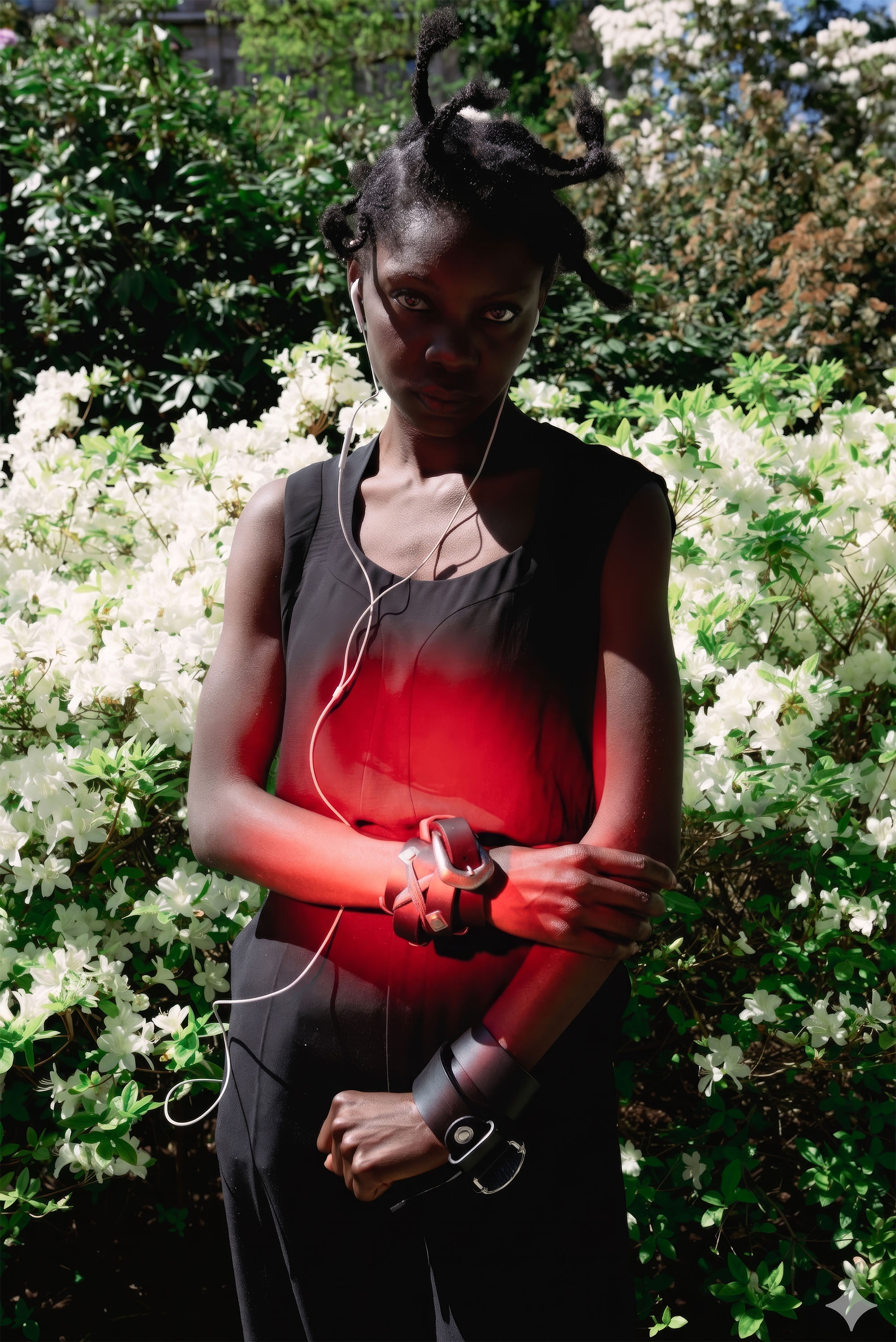
Since the beginning of this year, Chance has divided her time between the Arsenic—Center for Contemporary Performing Arts in Lausanne, where she is in residence, and her upcoming projects. Her work rarely begins with movement. It all starts with a story. An image, an idea, a memory, or a question first goes into what she calls her mental “briefcase.” When the time comes to create, she draws from it to build each work around a central message.
Music plays an essential role in this process. Chance uses it as a narrative thread. She deliberately listens to songs she does not know—sometimes chosen at random—in order to shift her perspective and break out of her routine. At the same time, she avoids certain types of music that are too closely tied to her personal life: creation requires distance—a space in which the story can exist independently of her.
Her works are structured as a series of scenes. She explores themes that are central to her practice, such as mental health and political history, with the aim of conveying a specific message to the audience. Her creative process follows a defined sequence: first the narrative, then the message, the title, and finally the music. Once this framework is in place, she develops the visual world of the production, envisioning each segment as a scene from a film.
Next come the set design, the costumes, and the collaboration with the technical team. Her experiences in theater teach her the importance of delegating and recognizing what a production needs: an outside perspective, specialized expertise, and guidance.
At the heart of her practice lies a unique position, straddling dance battles and the theatrical stage. Chance sees a fundamental difference between these two spaces. In a battle, the energy is immediate. She has to improvise, respond, and, above all, accept a form of confrontation with herself. On stage, the dynamic is different: it is no longer just about pushing herself to the limit, but about revealing herself. The audience is no longer simply watching a performance; it is receiving a story, a message, a glimpse into the artist’s inner world. This transition from one environment to the other also raises a broader question: how can a culture born on the streets be brought into institutions without losing its essence? For Chance, the challenge is to preserve what makes urban dance—a term she proudly embraces—so powerful while finding new spaces in which to share it.
Today, she creates by drawing inspiration from a wide range of practices, from the streets to cultural institutions. What drives her to keep going is not ambition alone, but a deep-rooted sense of self-worth: the conviction that her work deserves to exist. That conviction is also sustained by those who support her—her friends—and by her sister Elisabeth, who has always stood by her side.
French
En décembre 2012, à son retour de la finale de Jeunes Talents Valaisans, Chance Sayela jette à la poubelle l’enveloppe remise lors de la cérémonie. Elle est persuadée qu'elle ne contient qu'un diplôme, et ce morceau de papier ne l'intéresse pas. Le lendemain, sa petite sœur Elisabeth récupère l’enveloppe avec l’intention de la faire encadrer. À l'intérieur, elle découvre un chèque de 500 francs suisses. Cette somme permettra à Chance de financer ses premiers cours de danse.
Si l’anecdote ressemble à un heureux hasard, elle apparaît, avec le recul, comme le véritable point de départ de son parcours artistique.
Quelques mois plus tôt, les deux sœurs s'étaient présentées au casting de Jeunes Talents Valaisans, à Sion. Chance, quatorze ans, y danse. Elisabeth, dix ans, réalise les mix qui accompagnent les performances de sa soeur. Elles entament alors une aventure qui les mènera, pendant près d'une année, de sélection en sélection. Les trajets se multiplient, les répétitions aussi. Le soir de la finale, Chance présente une chorégraphie hip-hop devant le public et le jury. À l'issue de la compétition, elle décroche la deuxième place. Le classement importe moins que ce qu'il révèle déjà : pour la première fois, la danse ouvre une possibilité concrète.
Les années qui suivent sont entièrement consacrées à la danse. Chance se forme dans plusieurs écoles, affine sa technique et construit peu à peu son langage. Les entraînements rythment ses semaines. Au fil du temps, le hip-hop laisse une place grandissante au krump, une danse née à Los Angeles, dans laquelle la colère, la joie ou la douleur deviennent matière à mouvement. Elle y trouve une intensité brute, plus proche de ce qu’elle cherche à exprimer.
La danse devient aussi un espace d'appartenance. Les studios, les entraînements et les rencontres façonnent une forme de famille choisie. Jusqu'au jour où cette promesse se fissure. En intégrant une fam (une crew dans le milieu krump), Chance est confrontée à des violences physiques et psychologiques. Face à un climat d'injustice et au silence de celles·eux qui l'entourent, elle prend une décision radicale : arrêter de danser. Du jour au lendemain, elle s'éloigne d'un univers auquel elle a consacré plusieurs années et choisit de se concentrer sur ses études.
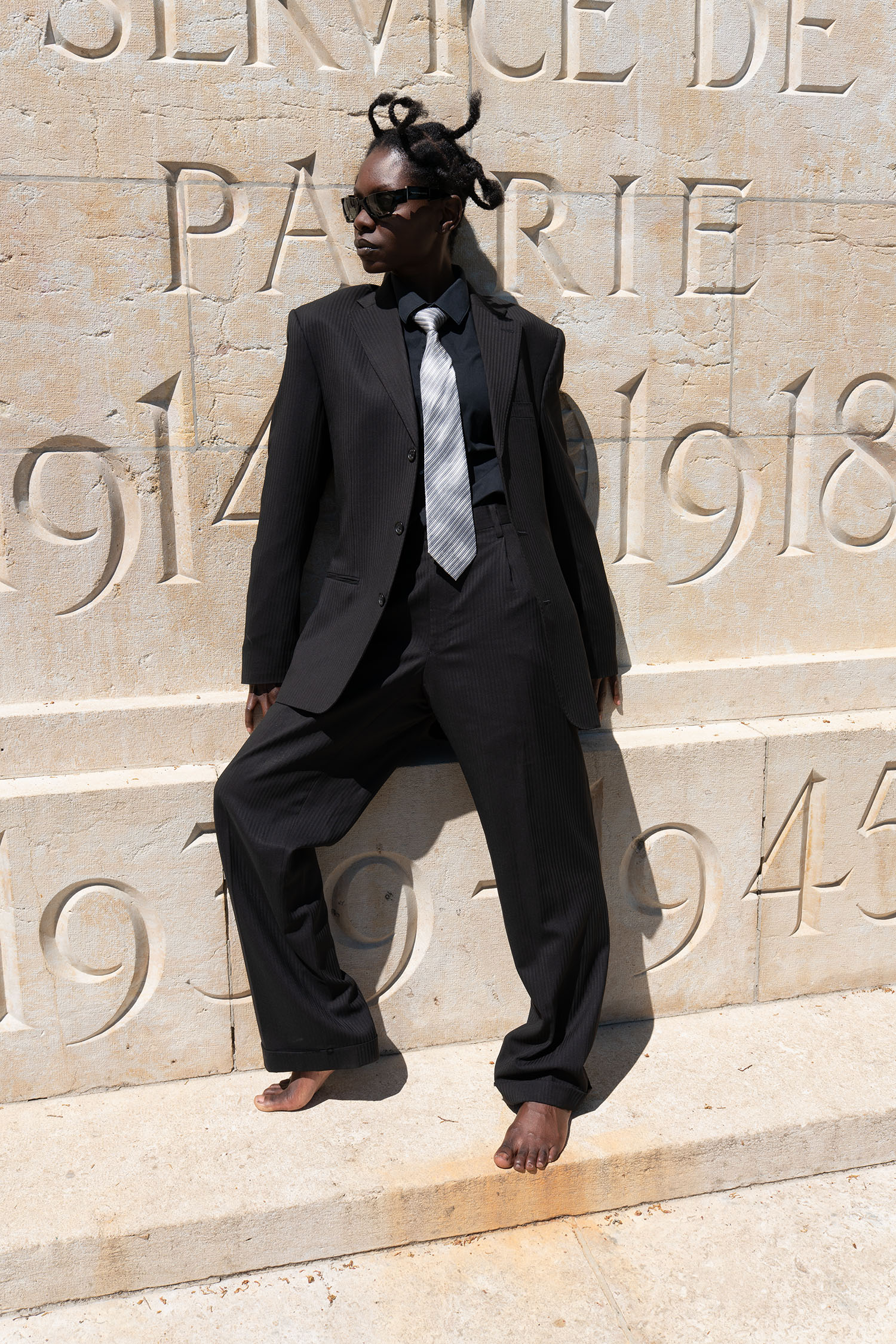
Quelques mois plus tard, son diplôme d'assistante dentaire en poche, elle part à Paris pour célébrer cette nouvelle étape avec ses amis·es. Alors qu'elle attend son bus pour rentrer en Suisse, un agent l’aborde à la gare routière et lui propose de travailler dans le mannequinat. Chance décide de rester. Pendant près d'une année, elle découvre un monde fait de castings, de soirées et d'une vie qui ne lui ressemble pas. Les fêtes et les excès finissent de la convaincre qu'elle ne trouvera pas sa place dans ce milieu.
De retour en Suisse, elle s'installe à Zurich. C'est là qu'elle rencontre l'artiste-performeuse Valerie Reding. À son contact, elle découvre le champ de la performance contemporaine et entrevoit une autre manière d’habiter la scène. Elle a alors vingt-deux ans. Après près de quatre années éloignée de la danse, l'envie de créer refait surface, petit à petit.
Chance déménage à Lausanne et reprend la danse en réalisant ses propres projets. Cette fois, elle danse à ses propres termes, selon ses propres conditions. En avril 2025, elle participe à une battle organisée par l’Arsenic. Ce jour-là, elle remporte la compétition. Plus qu'une victoire, elle y voit une confirmation : celle que le travail accompli n'a pas disparu. Cette reconnaissance devient la preuve qu’un retour à la danse est possible.
Quelques mois plus tôt, elle présentait un dossier aux Quarts d’heure du Théâtre Sévelin 36. Son projet est retenu et marque une nouvelle étape de son parcours : pour la première fois, elle crée une pièce destinée à la scène. Présenté en novembre 2025, son spectacle évoque la difficulté de trouver et de prendre sa place. Il s’intitule The Show Must Go On.

Depuis le début de cette année, Chance partage son temps entre l’Arsenic - Centre d'art scénique contemporain à Lausanne, où elle est en résidence, et ses prochains projets. Son travail commence rarement par un mouvement. Tout part d'une histoire. Une image, une idée, un souvenir ou une question viennent d'abord nourrir ce qu'elle appelle sa « mallette » mentale. Lorsque vient le moment de créer, elle y puise pour construire son spectacle autour d'un message central.
La musique joue un rôle essentiel dans ce processus. Chance l'utilise comme un fil narratif. Elle écoute volontairement des morceaux qu'elle ne connaît pas, parfois choisis au hasard, afin de déplacer son regard et de sortir de ses habitudes. À l'inverse, elle évite certaines musiques trop liées à son intimité personnelle : la création exige une distance, un espace où l'histoire peut exister indépendamment d'elle.
Ses pièces se construisent comme une succession de tableaux. Elle explore des thèmes qui la traversent, comme la santé mentale ou l’histoire intime et politique, avec la volonté de transmettre quelque chose de précis au public. Son processus suit un ordre défini : d'abord la narration, puis le message, le titre et enfin la musique. Une fois cette architecture posée, elle développe l'univers visuel du spectacle, imaginant chaque morceau comme une scène de film.
Viennent ensuite la scénographie, les costumes et le travail avec l'équipe technique. Ses expériences dans le théâtre lui ont appris l'importance de déléguer et de reconnaître ce dont une création a besoin : un regard extérieur, une compétence précise, un accompagnement.
Au cœur de sa pratique reste cette position singulière, entre les battles et la scène théâtrale. Deux espaces entre lesquels Chance observe une différence fondamentale. Dans une battle, l’énergie est immédiate. Il faut improviser, répondre et surtout, accepter une forme d’affrontement avec soi-même. Sur scène, le rapport est différent : il ne s’agit plus seulement de se dépasser, mais de dévoiler. Le public ne regarde plus uniquement une performance ; il reçoit une histoire, un message, une part de l’intimité de l’artiste. Cette transition d’un milieu à l’autre pose aussi une question plus large : comment faire entrer dans les institutions une culture née dans la rue sans en perdre l'essence ? Pour Chance, l'enjeu est de préserver ce qui fait la force de la danse urbaine - un terme qu’elle revendique fièrement - tout en trouvant de nouveaux espaces pour la partager.
Aujourd'hui, elle construit en observant des pratiques multiples, de la rue aux institutions. Ce qui la pousse à continuer n'est pas seulement l'ambition, mais un amour-propre solide et ancré : la conviction intime que son travail mérite d’exister. Cet élan est aussi nourri par celles et ceux qui l’accompagnent, ses amis·es - et sa sœur Elisabeth, présente depuis toujours.