Clothing is more than something that is worn; it is also a cultural object that transmits memory and meaning. In Notes & Artefacts from altared futures – Temporarily closed for healing, clothing, textiles, and materials exist within this conception of clothing. They are worn, carried, or suspended. Their surfaces - dyed with indigo, clay, and tree bark - are designed to transform over time, responding to the elements and the world around them.
The project draws from portable artefacts, specifically altars and talismans that moved between West Africa and the Americas during the Transatlantic Slave Trade. Not as fixed objects, but as culture, knowledge, and practices reconstructed through memory, gesture, and embodied knowledge. Enslaved Africans were denied the right to carry their possessions and cultural objects with them, and as a result, what existed had to be remade - from memory and from available resources. Materials were sourced locally, assembled, and imbued with meaning through use. In this sense, the altar or talisman is less an object than a process: something continually reconfigured in response to displacement. It is this logic that Rafael Kouto adopts and works through.
Swiss with West African roots, Kouto’s practice sits at the intersection of fashion, research, and pedagogy. “Community couture,” a term he uses to describe his approach, is a mode of collective making that resists the extractive and gatekeeper logics of the Western fashion industry, which often prioritise ownership, authorship, and exclusivity over shared knowledge and access. Developed initially as an open-source approach during his studies, it has since taken form through workshops where participants bring their own garments, working together to transform them. The emphasis is not on producing a final collection, but on sharing methods and making processes visible, transferable, and adaptable.
Upcycling, within this framework, is not just a sustainability play or an aesthetic choice. It is a condition - a starting point that shapes how materials are approached, understood, and reconfigured. Where much of the fashion industry operates through replication - reworking and remaking past styles into new products - Kouto insists on working with what already exists. The garment is not a reference, but a resource: something to be taken apart, reassembled, and transformed into something else. In Notes & Artefacts from altared futures, this approach shifts toward a more explicitly spiritual interest.
Developed following research trips to Ghana and Nigeria, the project emerged through an interest in the relationship between craft and spirituality - particularly how materials, symbols, and techniques carry meaning beyond their immediate function. In many contexts, textiles, objects, and natural elements are not neutral. They are active. Stones, branches, and fragments of fabric can become sites of spiritual significance depending on how they are assembled, used, and valued.
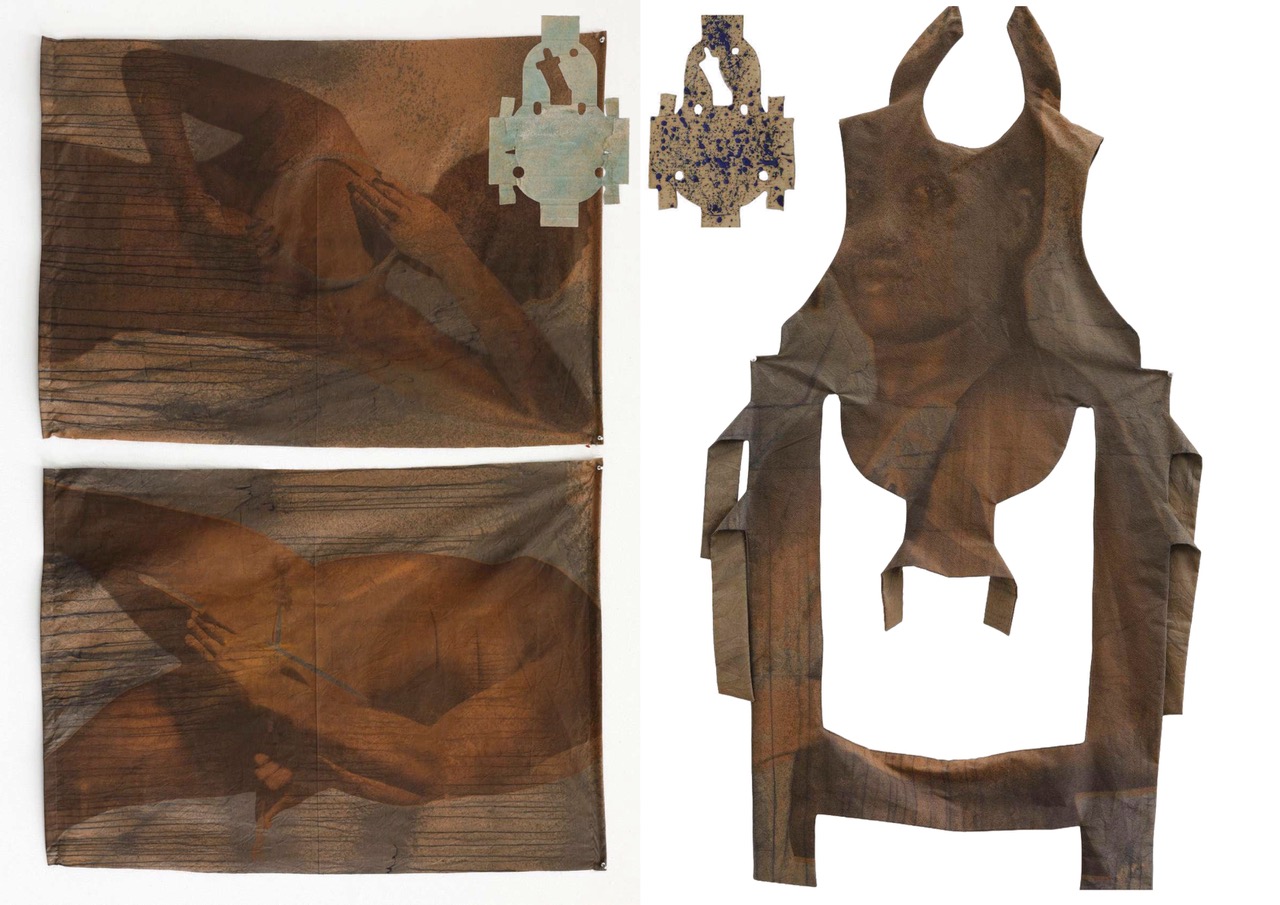
Kouto began to think about how this might translate into his own practice - not as a reference, but as a method. What would it mean to design objects not only for use, but for activation? To consider their spiritual function alongside their material one?
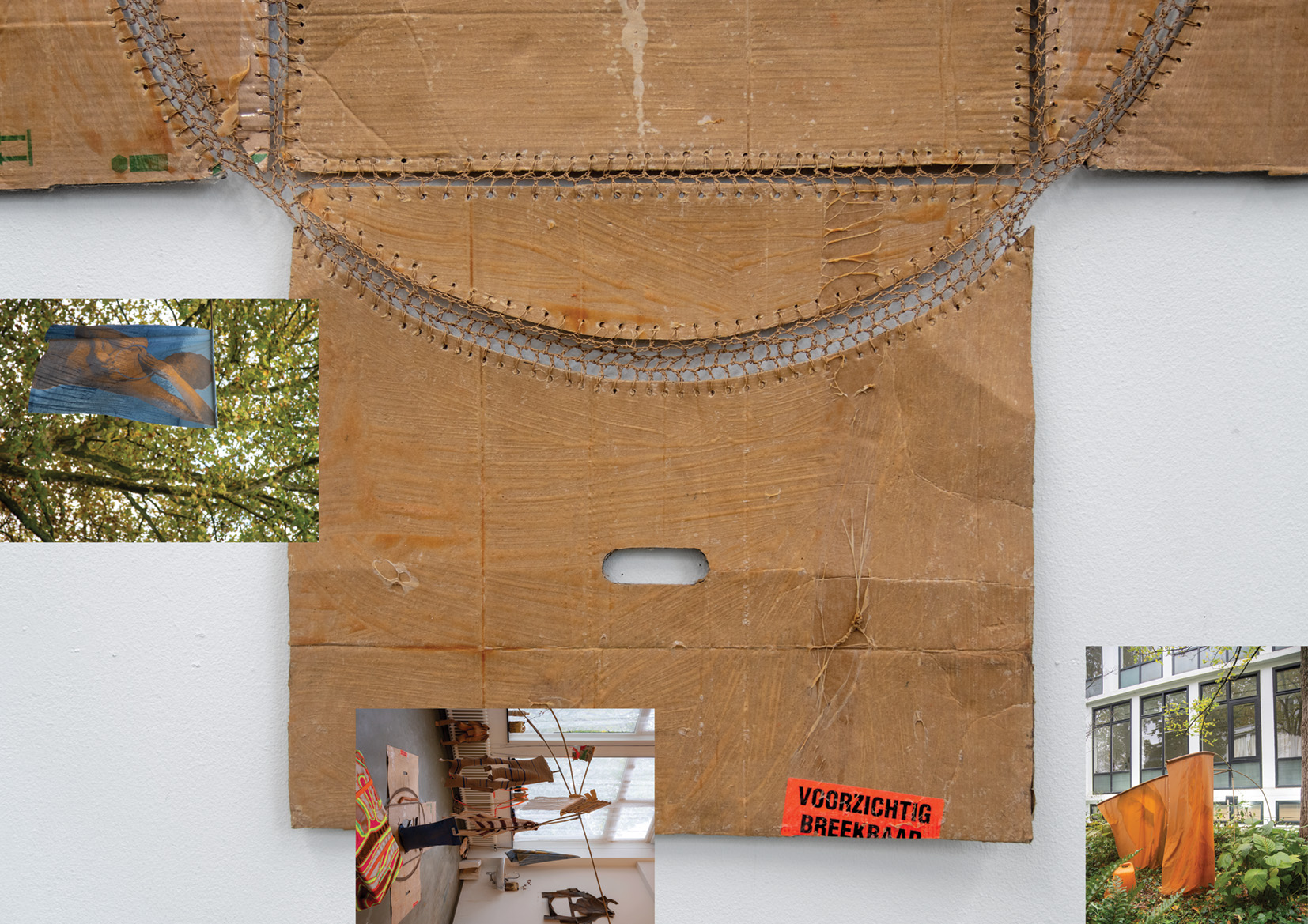
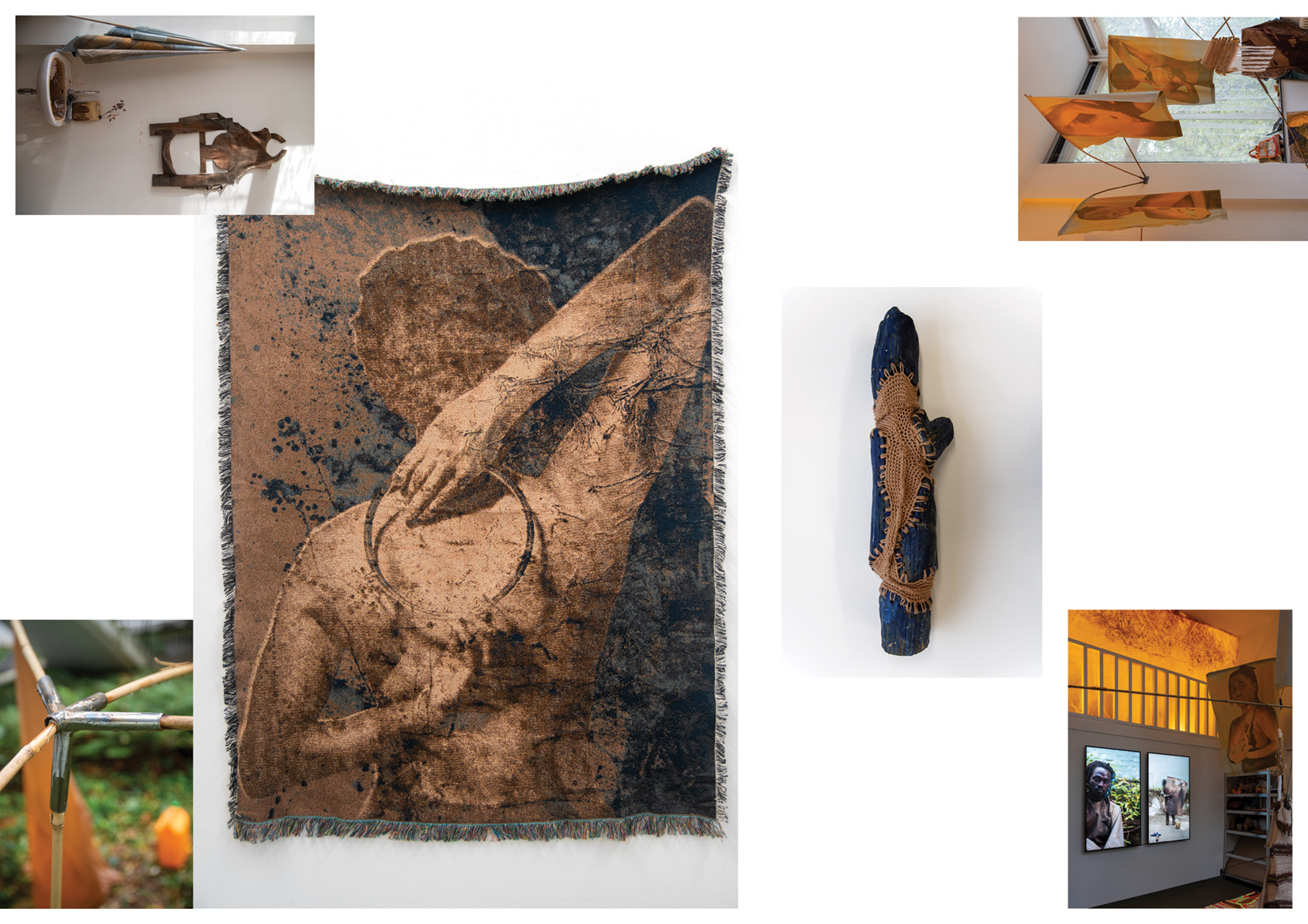
The objects that emerge from the project prioritise exploration over the finished garment. Ceramic forms - sometimes cast from plastic baskets or natural elements - are broken and reassembled through crochet. Textiles are layered with natural dyes before being screen printed, producing surfaces that feel worn, unstable, and almost dreamlike. Packaging materials such as cardboard are reimagined as future artefacts, their perceived disposability unsettled through recontextualisation.
Across these works, nothing is resolved. Objects remain open - subject to change, interaction, and eventual transformation.
This openness extends into how the work is encountered. Rather than being presented as static pieces, the artefacts are activated through performance. In the accompanying film, Nigerian performer James Notin engages with the objects in a slow, intuitive choreography. There is no fixed script. Instead, the body becomes a site through which the objects are felt, carried, and brought into relation.
When the project was presented for the first time at the Jan van Eyck Academie as part of the Open Studios in October 2025, visitors were invited to handle and carry certain pieces, shifting the usual dynamic between audience and art object. The object was no longer something to be observed at a distance, but something to be embodied - physically and, perhaps, spiritually. Kouto felt it was important to change the way the work is seen and to open it up beyond the limits of display. The project is accompanied by a publication in collaboration with Dylan Fragnière (@dada_okafor), available to purchase, which expands the research through a poetic and critical reflection on the relationship between spirituality, materials, craft, and decoloniality, developed through an experience that is at once artistic, anthropological, and personal.
What emerges through these gestures is a shift in what the object is, but also in what it does. It is no longer complete in itself, but comes into being through interaction - through handling, carrying, wearing, and exposure to the elements. In this sense, the work moves away from the idea of the garment as a finished product and towards something closer to a living system.
Within the context of fashion, this introduces a different set of possibilities. Where contemporary fashion often operates through cycles of production and consumption - collections released, circulated, and replaced - Kouto’s work proposes another rhythm: one where objects are not finalised, but remain in flux, and where value is not tied solely to newness or scarcity, but to the relationships that form around an object over time.
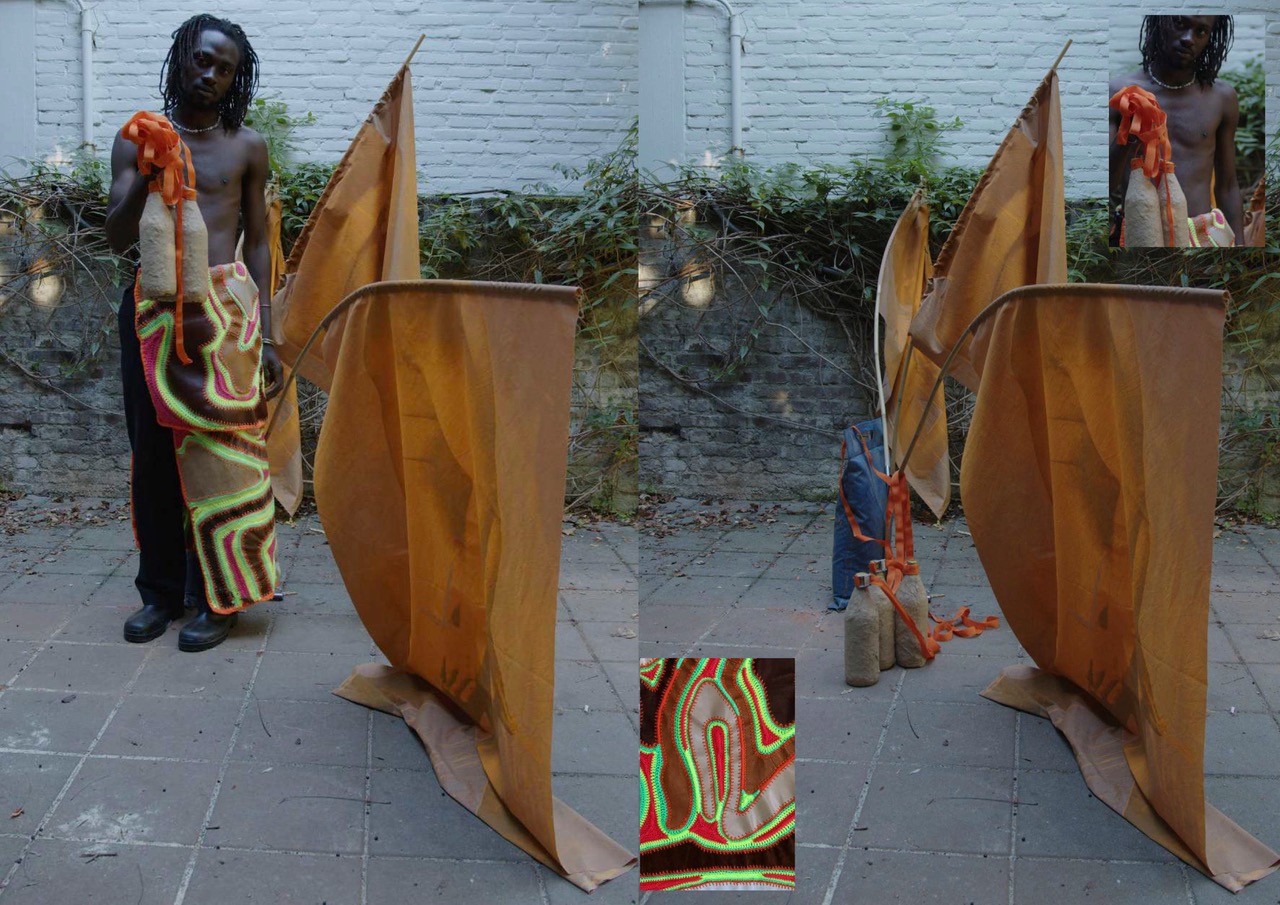
In place of a lookbook or a runway show, Notes & Artefacts from altared futures unfolds across installation, film, and publication. The project resists singular definition, moving instead through different formats and contexts. For Kouto, this is less about rejecting fashion than expanding its boundaries, allowing it to intersect with other ways of making, thinking, and sharing. What emerges is a practice that treats fashion not only as a site of production, but as a field of transformation.
Kouto describes the future he is interested in building as a “dreamer-like” one - a space that exists somewhere between imagination and reality. A future that begins as an individual gesture, but becomes collective through its circulation.