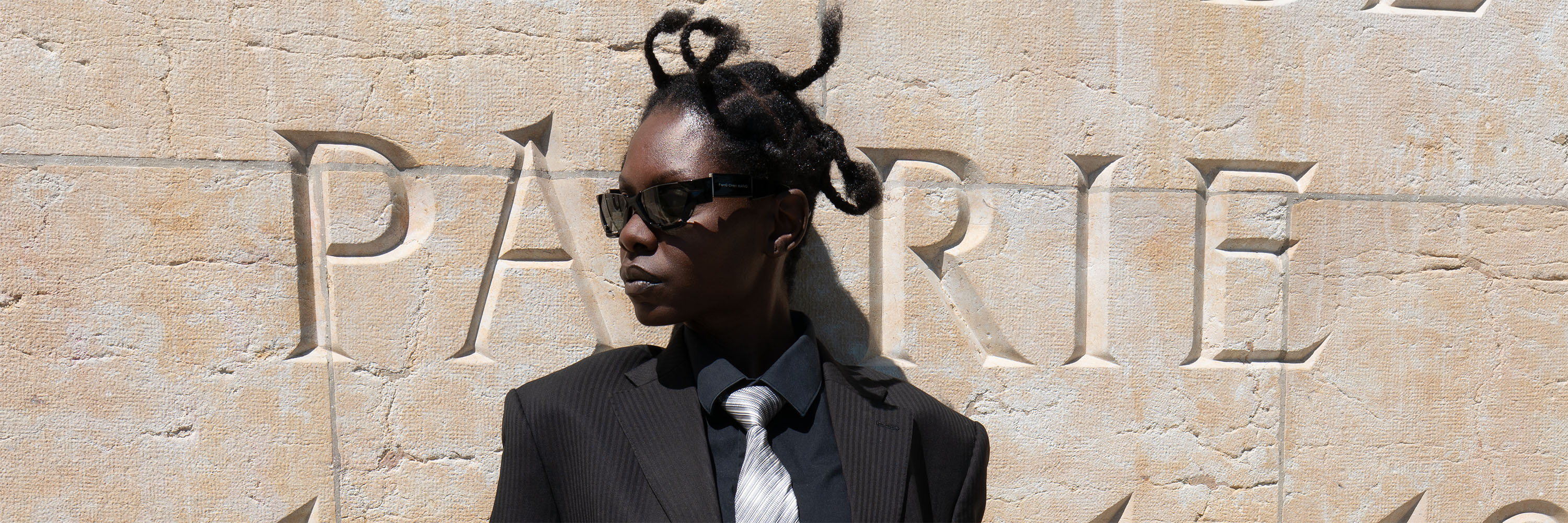
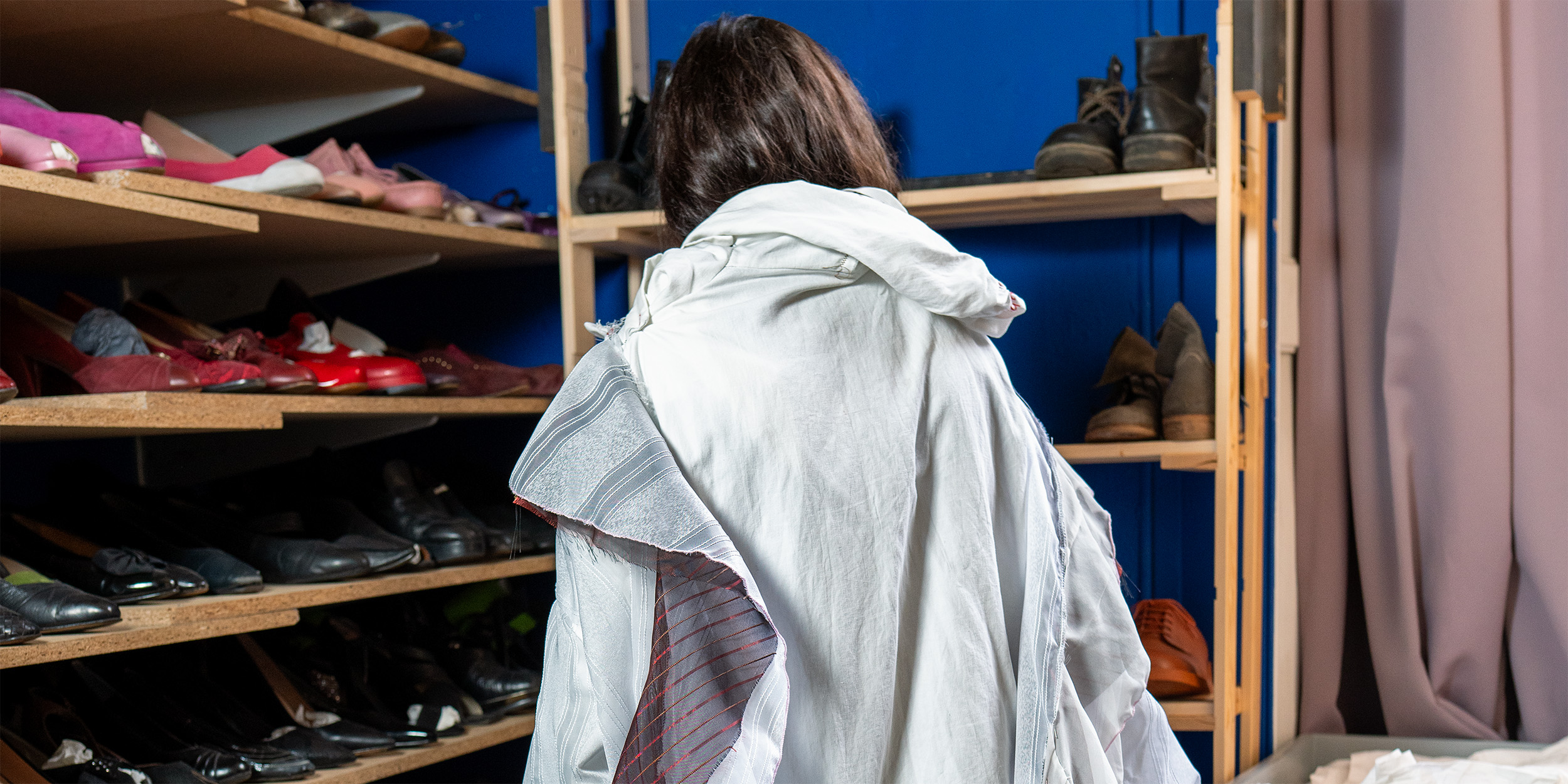
Start, then, with an object that was paid for.
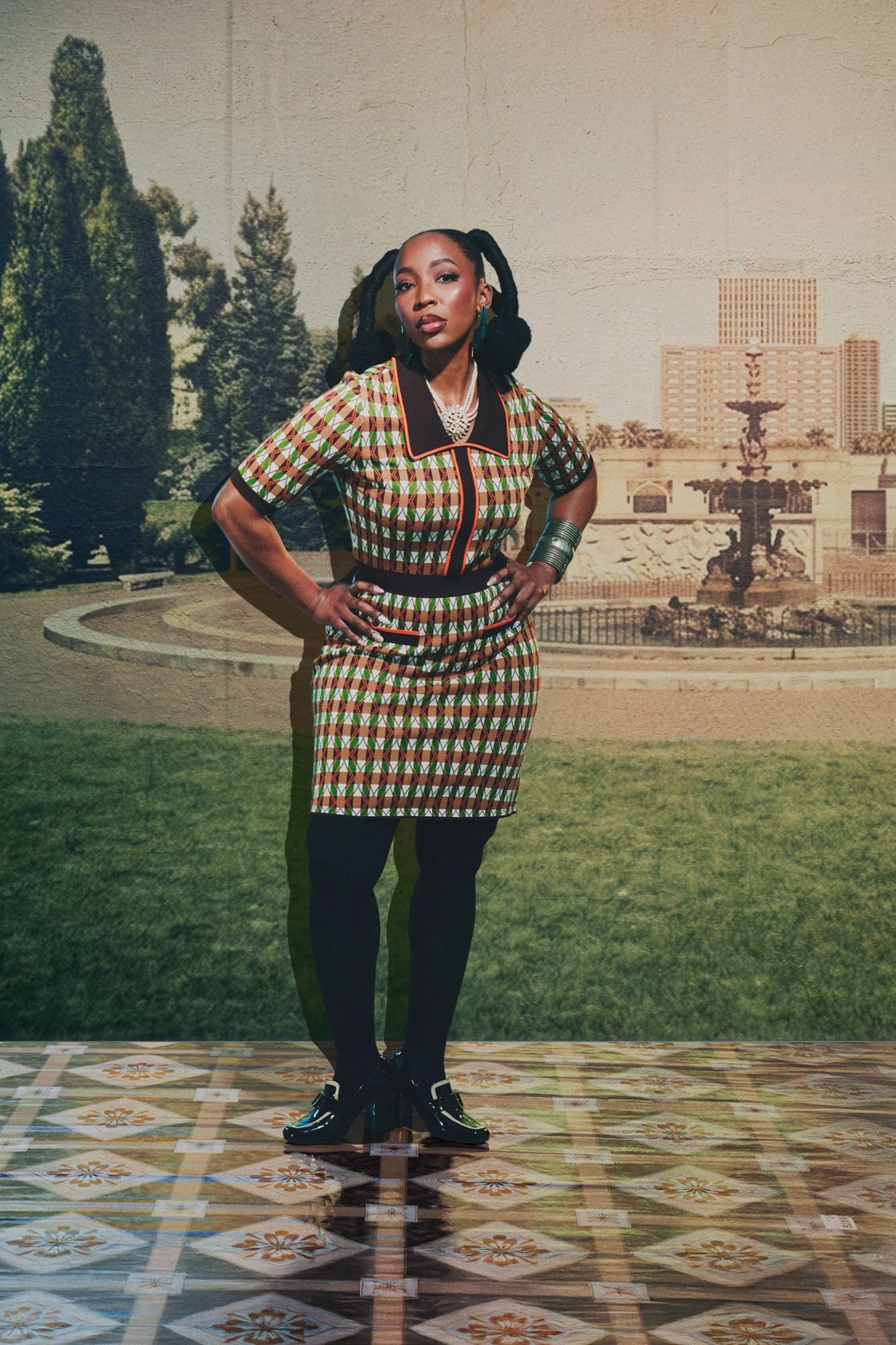
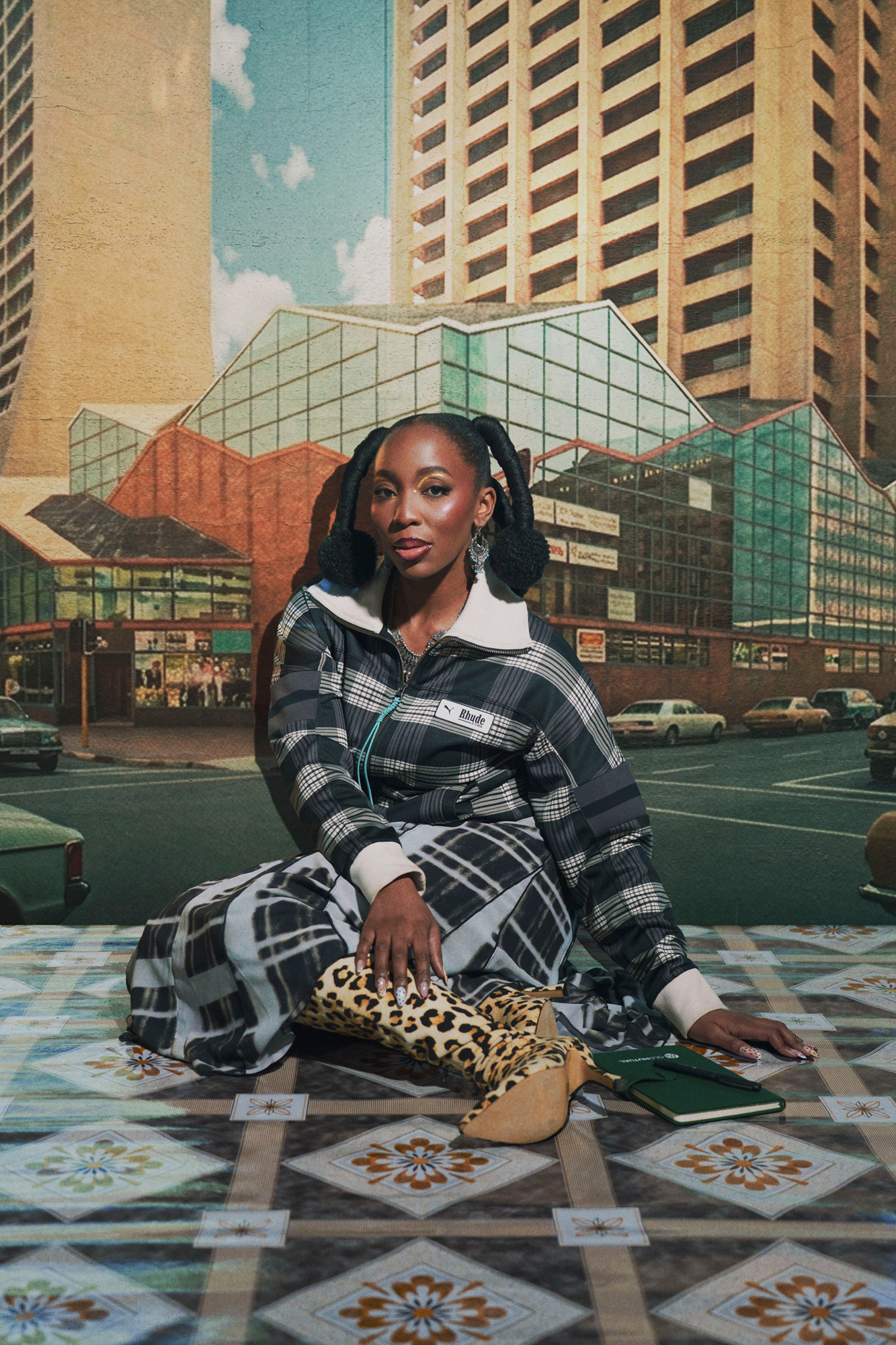
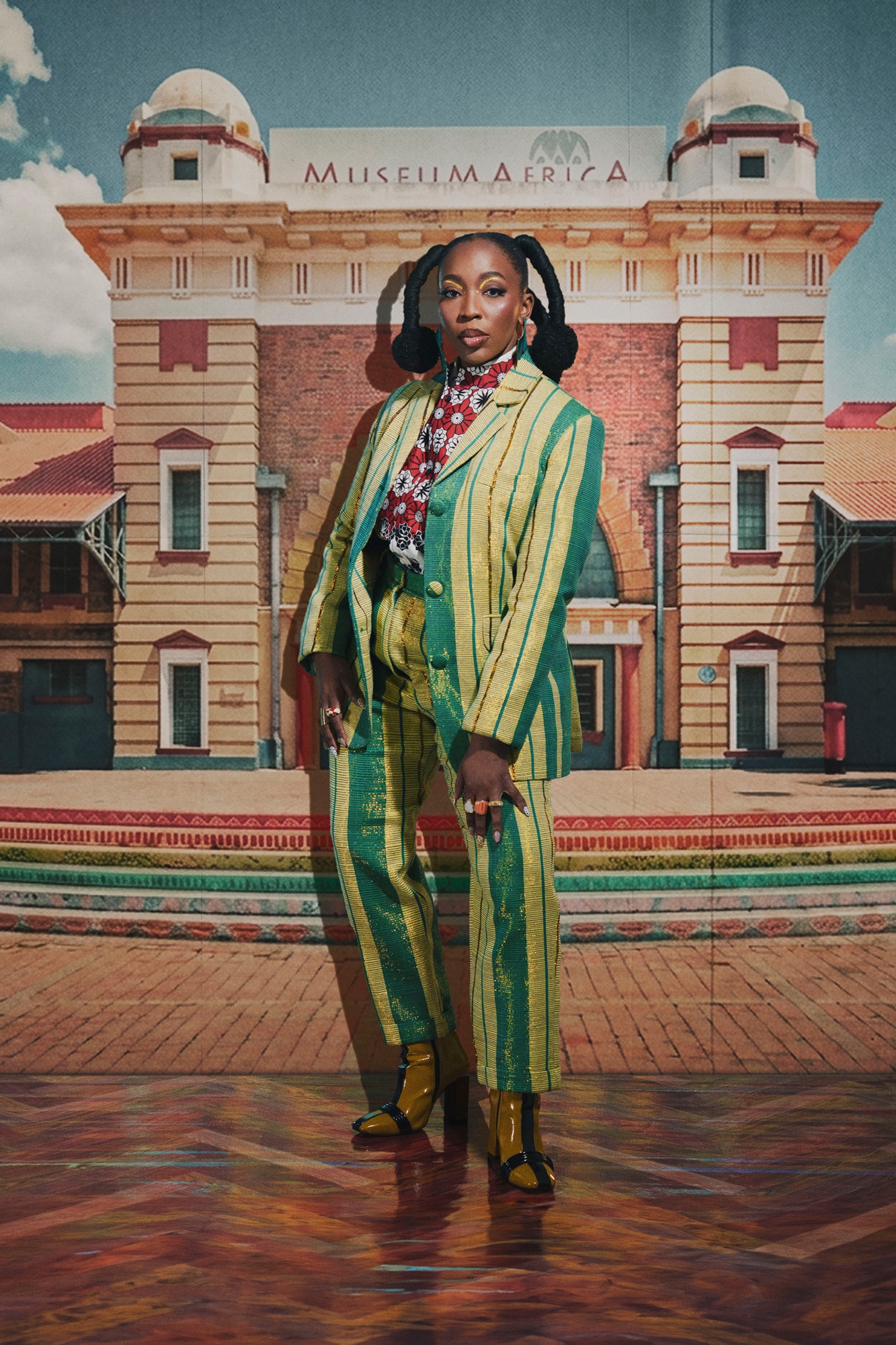
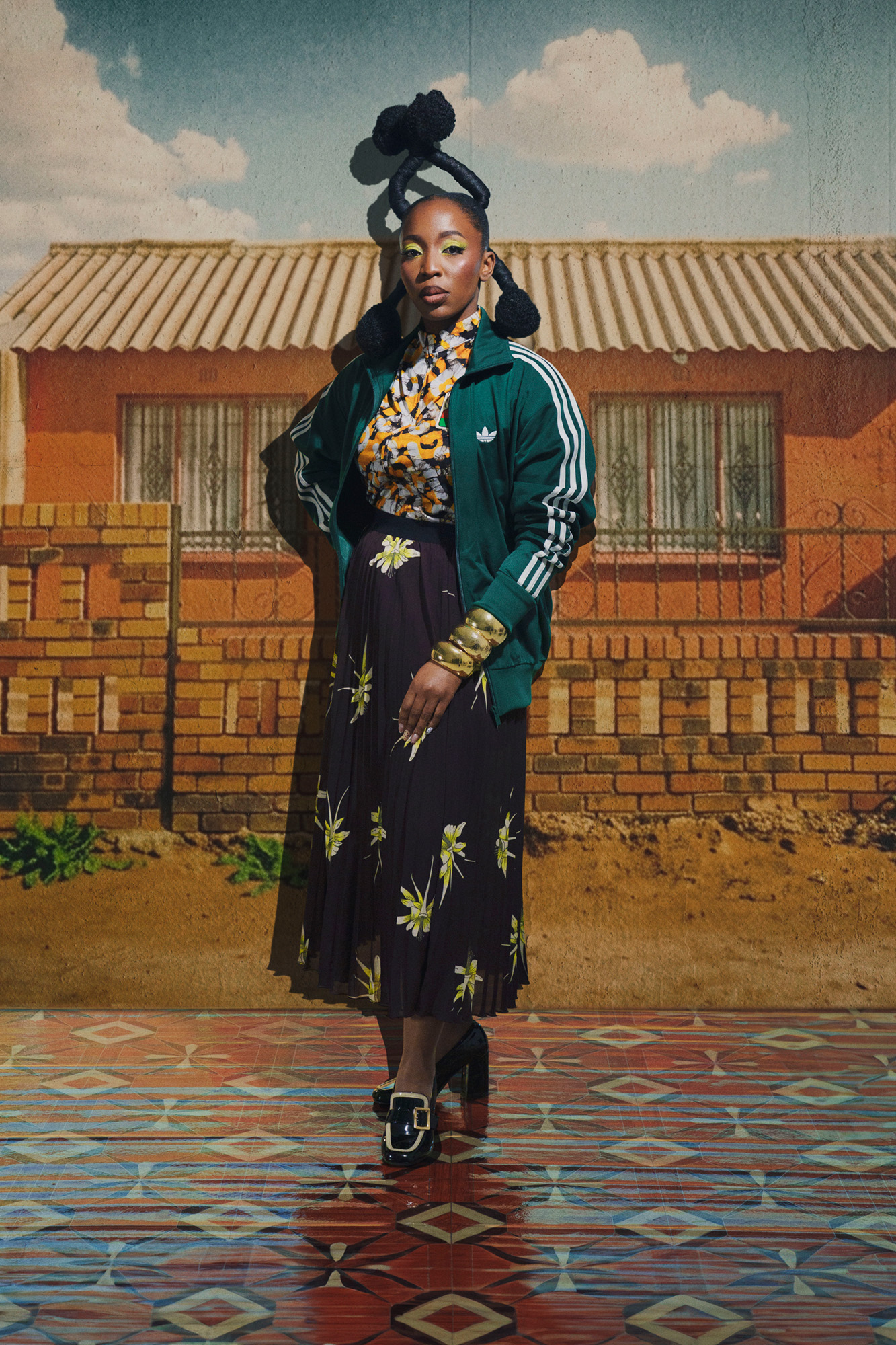
In Ke Lefa Laka: Her-Story, Kganye works with what her mother left in the wardrobe. She began two years after her mother passed away, realising that the clothes her mother wore in her twenties and thirties were still hanging there, garments that had outlived their wearer and come to stand for her. With her grandmother's help she traced the locations of the photographs, wore the clothes, restaged the images and laid her figure over her mother's. One body, two outlines, not quite registered.
Look at how the pictures are titled. Moketeng wa letsatsi la tswalo la ho qala la moradi waka, at my daughter's first birthday party. Re shapa setepe sa lenyalo, we dance the wedding step. Setshwantso le ngwanaka, a portrait with my child. Sesotho, present tense, first person, and the first person is not the artist. Kganye titles the work in her mother's voice, as though dictated by the woman in the dress rather than written by the daughter now wearing it.
Then notice the occasions. A birthday, a wedding, a child, somebody stepping out for the evening. These are the moments a family decided were worth the cost of a photograph. Read an album as a ledger and it tells you what a household valued enough to spend on, and this one spent on joy. It is easy to read a black South African album backwards, as evidence of hardship, and miss what is in the frame: people having a good time. Outside the picture the circumstances were what they were. Inside it, somebody is dancing. So Her-Story does something stranger than mourning. It is made out of grief and assembled almost entirely out of joy, and to stand with her mother again Kganye has to re-enter her best days and wear them.
There is a precedent for reading an album this way. In 1997 Santu Mofokeng assembled The Black Photo Album / Look at Me: 1890-1950, eighty slides of portraits that urban black working and middle-class families had commissioned between those years. The word to hold is commissioned. These photographs were ordered and paid for by the people in them, while the state was designating them natives and the going image of a black South African was ethnographic. James Campbell reads this as assertion rather than memento: urbanity, modernity and pride against a society that wanted to consign them to a static past. Look at me.
The woman in the dress paid for more than photographs. Kganye's mother worked in a factory from the age of twenty until she passed. "I think my family was typical," Kganye says. Her mother belonged to a stokvel and a burial society, saved, was not big on debt, stretched every rand and was always selling something on the side. She bought a stand and built a house on it, over nine years, until it became comfortable. "I saw the journey of building a home." Her mother's instruction was four words long. Don't eat your seed.
That discipline has a history. For most of the last century black South Africans were locked out of formal credit and property. Burial societies grew among migrant workers on the mines, who pooled money so that a man who died far from home could be buried with dignity, and they followed the labour routes into the townships, where women ran the same logic around school fees and groceries. The exclusion was not incidental to the savings culture. It produced it. The stokvel is not an alternative to a bank. It is what a bank looks like when you build it yourself, out of people you know, with trust as the only collateral. The same pooled money that buried people paid for the weddings in the album.
Kganye's own route ran through another institution built where one was missing. She had worked at e.tv and finished her courses at the Market Photo Workshop, the Newtown school founded in 1989 to teach people the state had locked out of photographic training, when a Tierney Fellowship gave her R30,000 and a year to make Ke Lefa Laka. An interest in set design gave her the cardboard sets; Mary Sibande, a sculptor, helped bring them into the studio, and Nontobeko Ntombela worked with her on the research. Mentorship, official and unofficial, was essential. She finds it striking, now, how much that sum could do.
When the show went to New York she had never travelled, and could not afford to. Sharlene Khan, who would later supervise her master's, offered to buy the flight if she could find somewhere to stay. Then DJ Sbu took up the cause on Metro FM, and listeners kept calling in to donate. A radio audience of strangers pooled their money to send a young artist to her own exhibition, a stokvel in all but name. It was always, she says, a work that took community to make. Motho ke motho ka batho: a person is a person through other people, which here is simply a description of how the money moved.
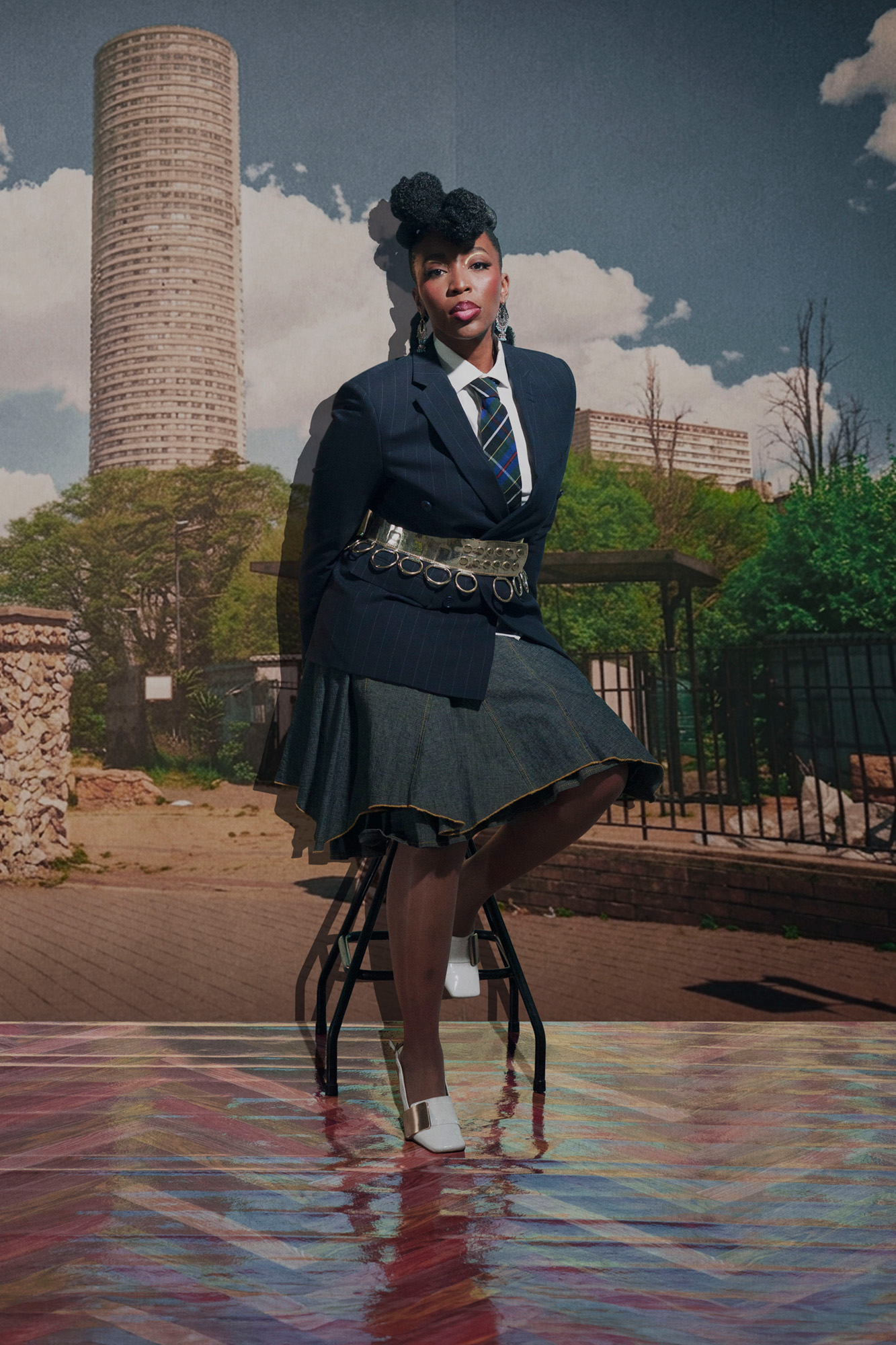
Ke Lefa Laka became her most sold and acquired work, and has gone on to win awards. It also brought a silence. She struggled to make new work afterwards and decided to study fine art, which she had never done. She paid her own fees, and the sales of Ke Lefa Laka helped pay them. "All of it comes from there." A daughter puts on the dress of a mother who has passed, to keep her close, and the photographs of that dress put her through university. The clothes were the inheritance. Then the pictures of the clothes were.
And then the inheritance climbs. With her mother gone, caring for her younger sister and her grandmother became a given, and the extended family with them. She is setting up a trust for the family's education. Lefa is supposed to descend. For a great many South Africans it goes back up the line, the thing we call black tax. What arrives is not an estate but the obligation, and Kganye has chosen education as the form to pass it on in.
She calls it her most vulnerable work, and the exposure was not only grief. The work invited strangers into her personal space. At the Bamako Biennale, her first, it was turned into a billboard, to her horror. Once a work leaves you, she learned, you have to be clear about your conditions. "It's taken me years to reconcile this." In many black households money, like grief, is settled in the kitchen and never in the living room. A billboard is about as far from the kitchen as a picture can go.
What she learned was practical. Studio costs cleared every month, regardless. Money moved into savings. A clear salary for herself, which makes irregular income survivable. "What I do is art, but it's a business." In the last few years she has felt a ceiling, and the answer, again, is education: a business course, an MBA, the IP lawyers and pricing specialists any business needs. The plan is an art space in Johannesburg.
Her newest work turns to the house. Le Sale ka Kgotso (2025) is a life-size walk-through modelled on an RDP unit, the low-cost housing the post-apartheid state built as a promise, its rooms filled with ghost stories and inherited belief. She made it thinking about thirty years of democracy, and about the RDP house as a symbol of hope and of the future. The houses behind the family in Ke Lefa Laka are ordinary township houses, and the one her mother built took nine years of factory wages. One home earned, one issued.
So the direction reverses. Lefa reaches us from behind, from the dead, then turns and points forward. Kganye was left a wardrobe with a hundred good evenings in it, and a sentence. She has turned the one into a degree, a family trust and a career, and she is still keeping the other. Don't eat your seed. What is handed down is not the harvest. It is the instruction to keep something back for planting.