When Simi Madlani moved from a state school education in the UK to a private art institution in Spain, she found herself surrounded by people who seemed to possess a cultural vocabulary she had never been taught. Her peers had grown up with opera, parents in the creative industries and opinions about things she had never heard of. The experience made her increasingly aware of what she was apparently expected to already know.
“This made me think about who gets to be ‘in the know’, and who is expected to enter these spaces already understanding the rules,” she recalls.
Her graduate collection, Is Taste Real?, begins with this experience. It asks what an institution overlooks when it treats its own cultural codes as universal measures of knowledge, value and taste. What might change if cultural institutions stopped treating familiarity with particular codes and conventions as evidence of taste, and paid more attention to the cultural references, histories and experiences an individual brings with them?
For Madlani, these questions are also personal. Her parents moved to the UK after being forced from their home during the 1972 expulsion of Ugandan Asians. Their Ugandan and Indian cultures, she says, weren’t valued or respected in the society they arrived in. Years later, Madlani entered an art school where another set of cultural references carried considerable weight.
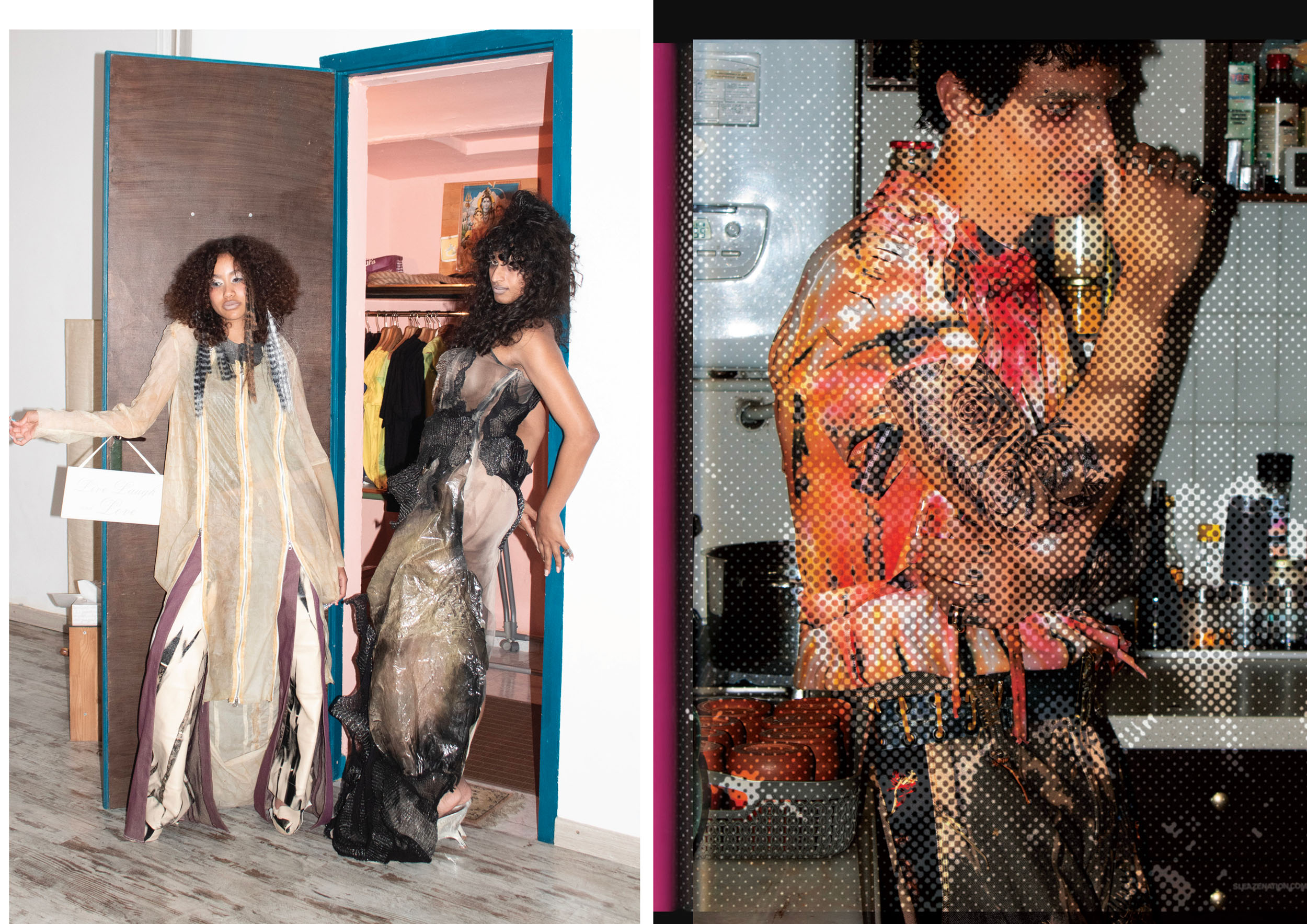
Her collection Is Taste Real? grew out of her questioning of how these distinctions are made and sustained.
“I think making the collection has made me realise that the problem isn't necessarily that taste doesn't exist, but that certain forms of taste have been presented as if they are universal,” Madlani explains. “We are taught what is sophisticated, desirable, innovative or valuable, and that becomes what we understand as ‘good taste.’ But those standards have been heavily shaped by a Western perspective.”
In her thesis, she uses the relationship between African masks and Picasso's Cubism as one example. She points to the way African objects were historically classified as “primitive” or ethnographic, while European artists drawing from them could have that influence recognised as groundbreaking within Western modernism. Her concern is with the bias behind these distinctions: why is value attached so differently, and who has the authority to make that distinction in the first place?
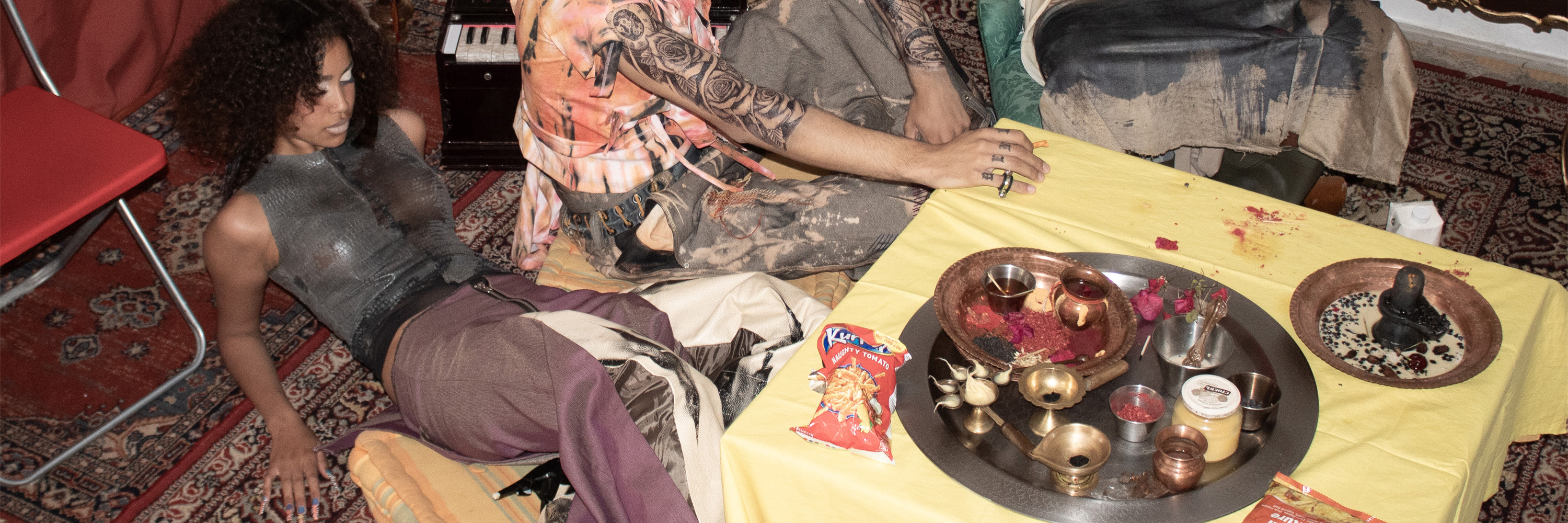
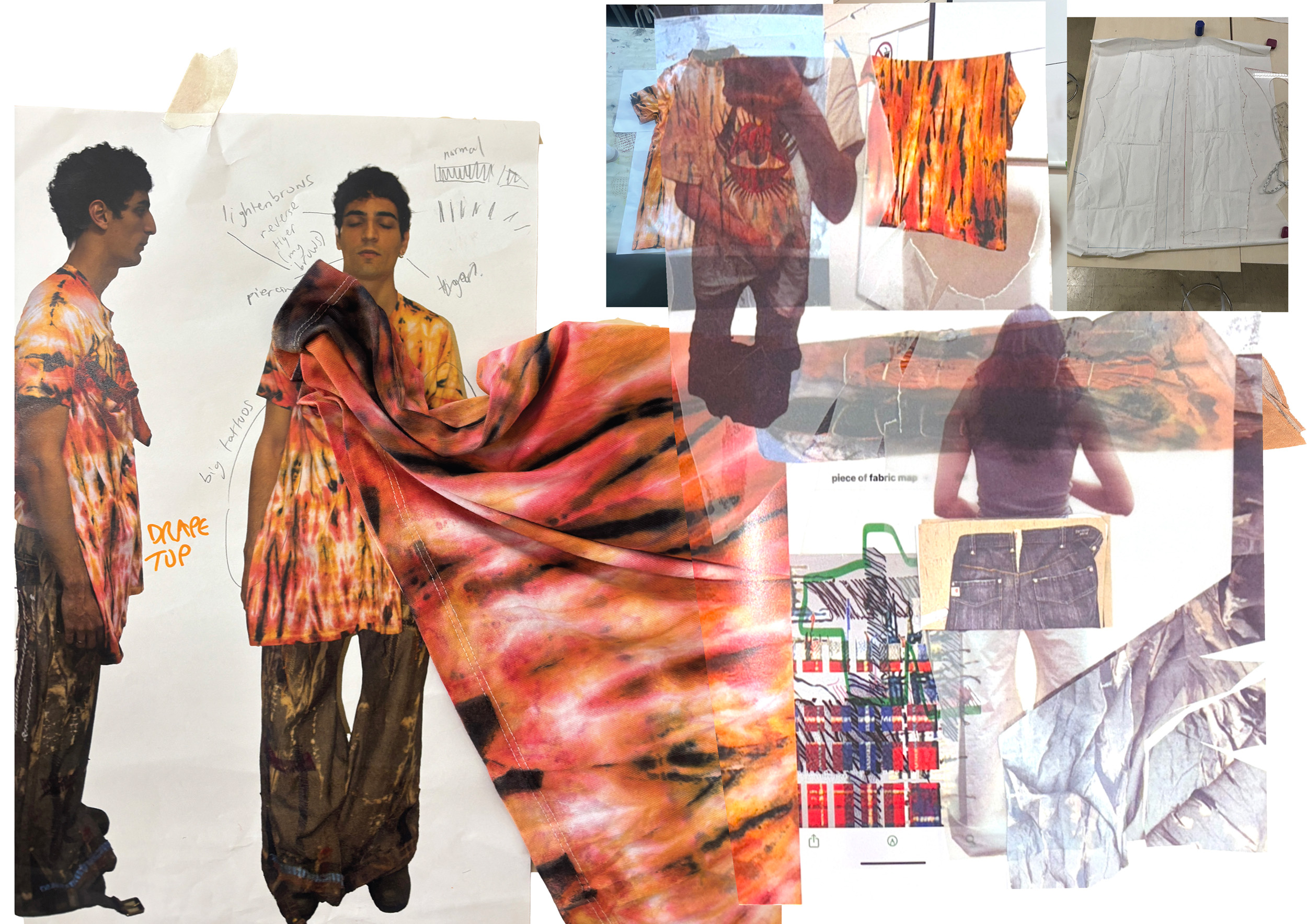
The same mechanics play out through the clothes. Animal print, for example, can be tacky, vulgar or excessive in one setting and luxurious, powerful or desirable in another. Plaid can move between different cultural traditions, punk and high fashion. Madlani works with these shifting associations throughout the collection, using animal prints, plaid, cowhide and plastic. For the accompanying editorial, she cast models of colour and photographed them in a small temple with references to British architecture, incorporating what she describes as “chav” references into the poses. The materials take on meaning through the bodies wearing them, where they are seen and the visual language surrounding them.
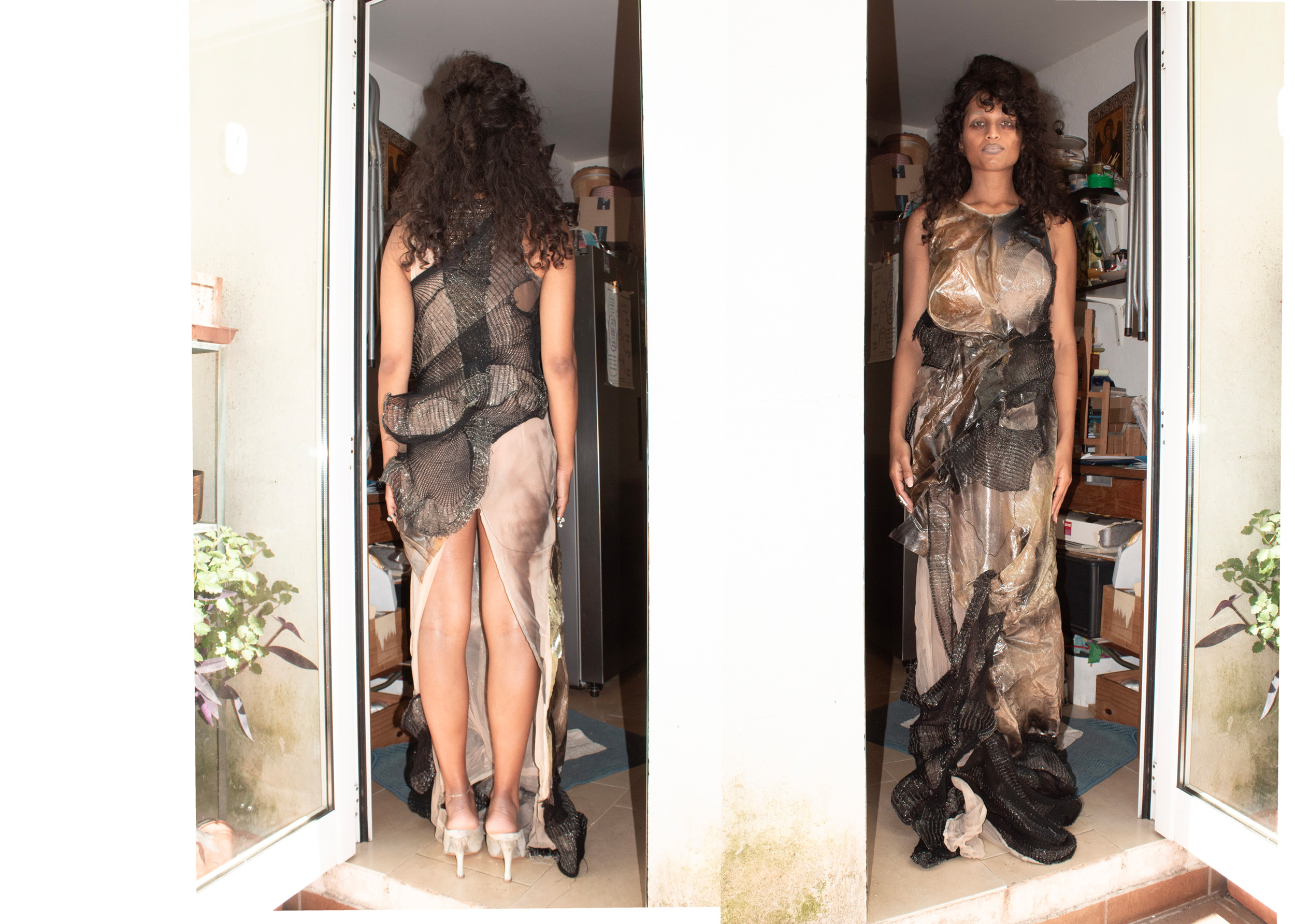
It’s not necessarily the material or object that changes, but the context in which it is read.
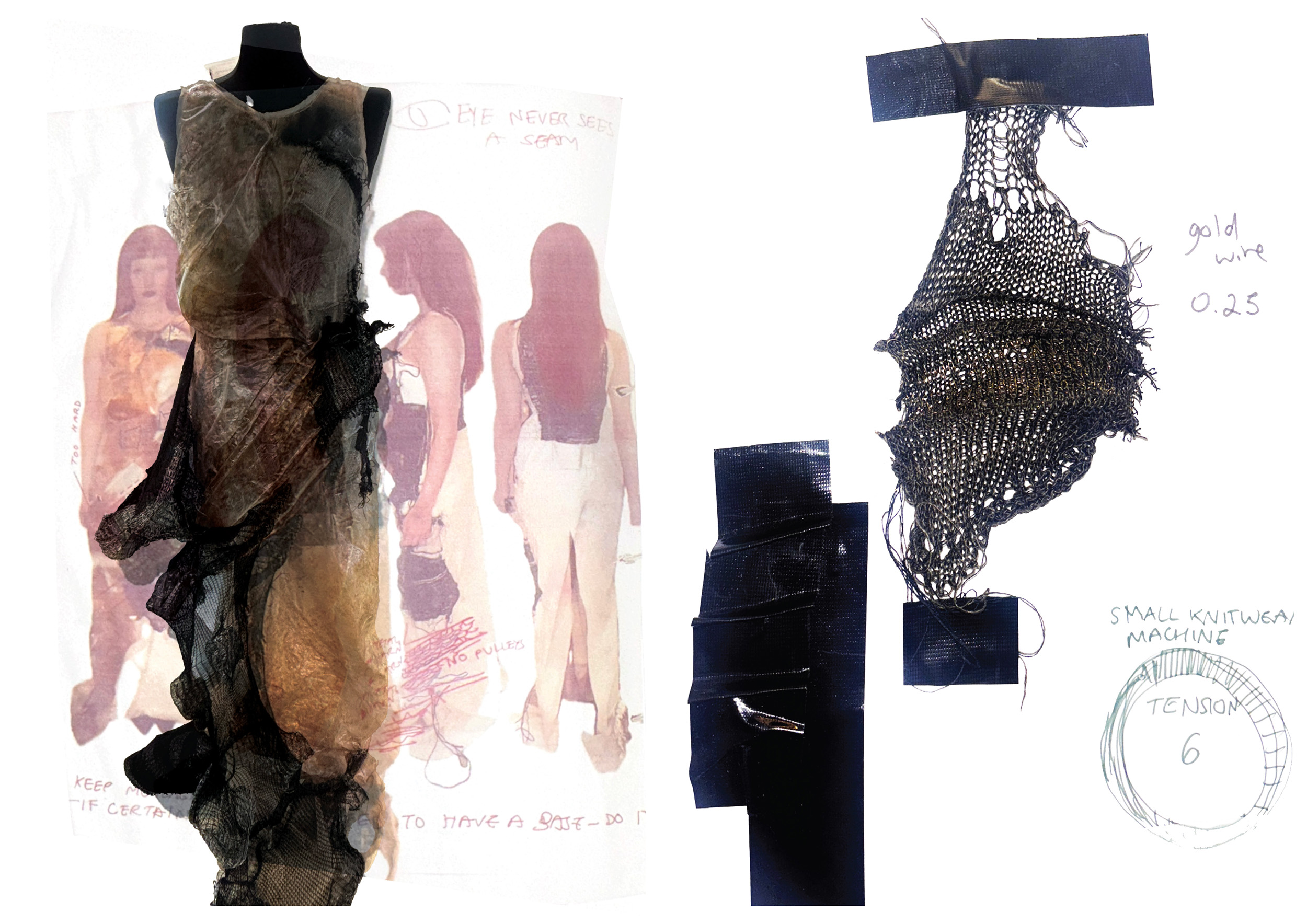
This idea also runs through Madlani’s process. Materials that might sit outside conventional ideas of refinement become starting points for experimentation. For one dress, she worked from a large piece of discarded construction plastic she found on the street, recreating and manipulating its distressed surface through clear plastic, paint, interlining, boning and knitted metal.
What interests her isn’t simply the transformation of an unconventional material into fashion, but the assumptions that determine whether we recognise value in it at all.
“Our perception of its value begins to change when we stop assuming that other people's standards are the only way to judge it,” she says.
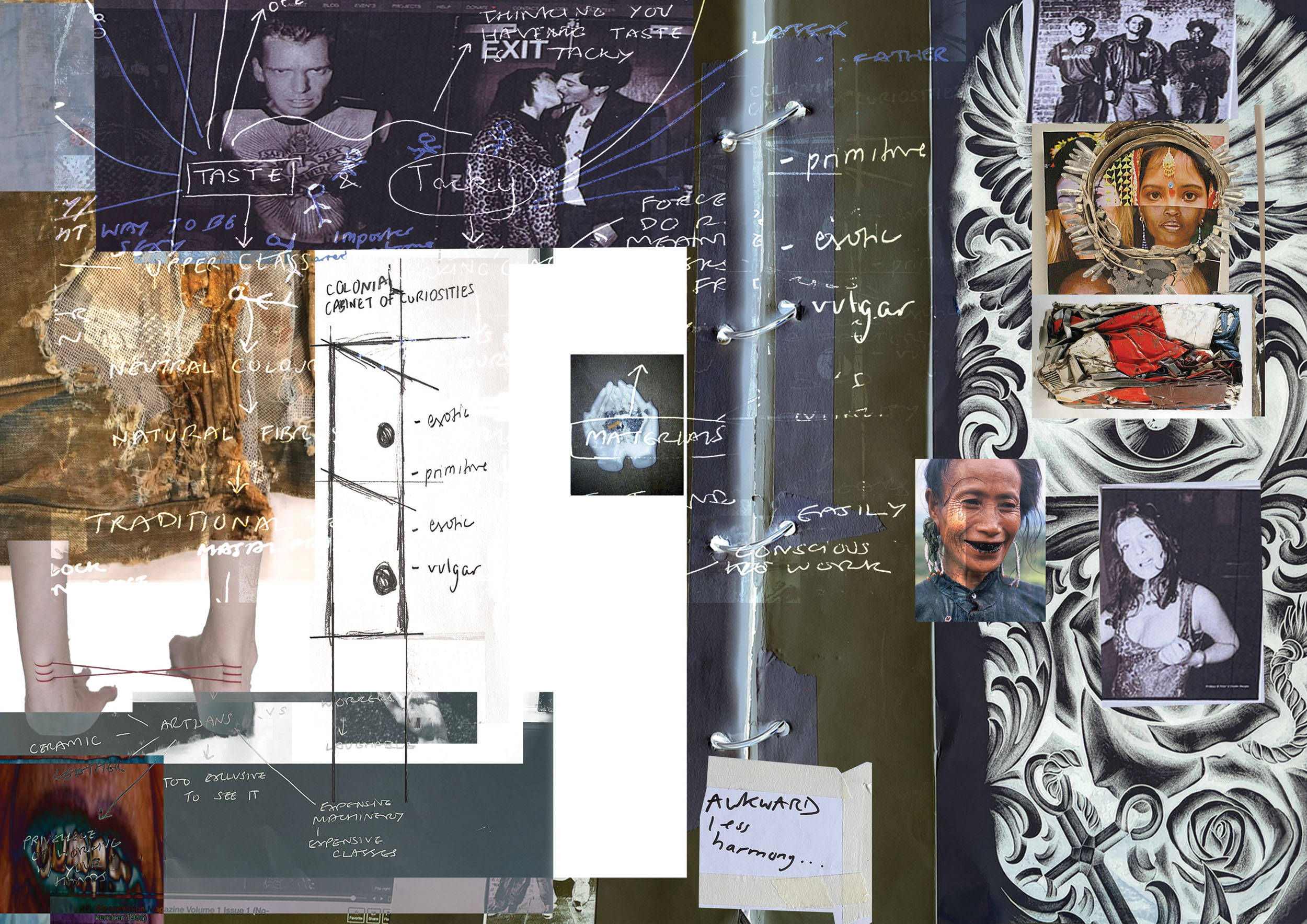
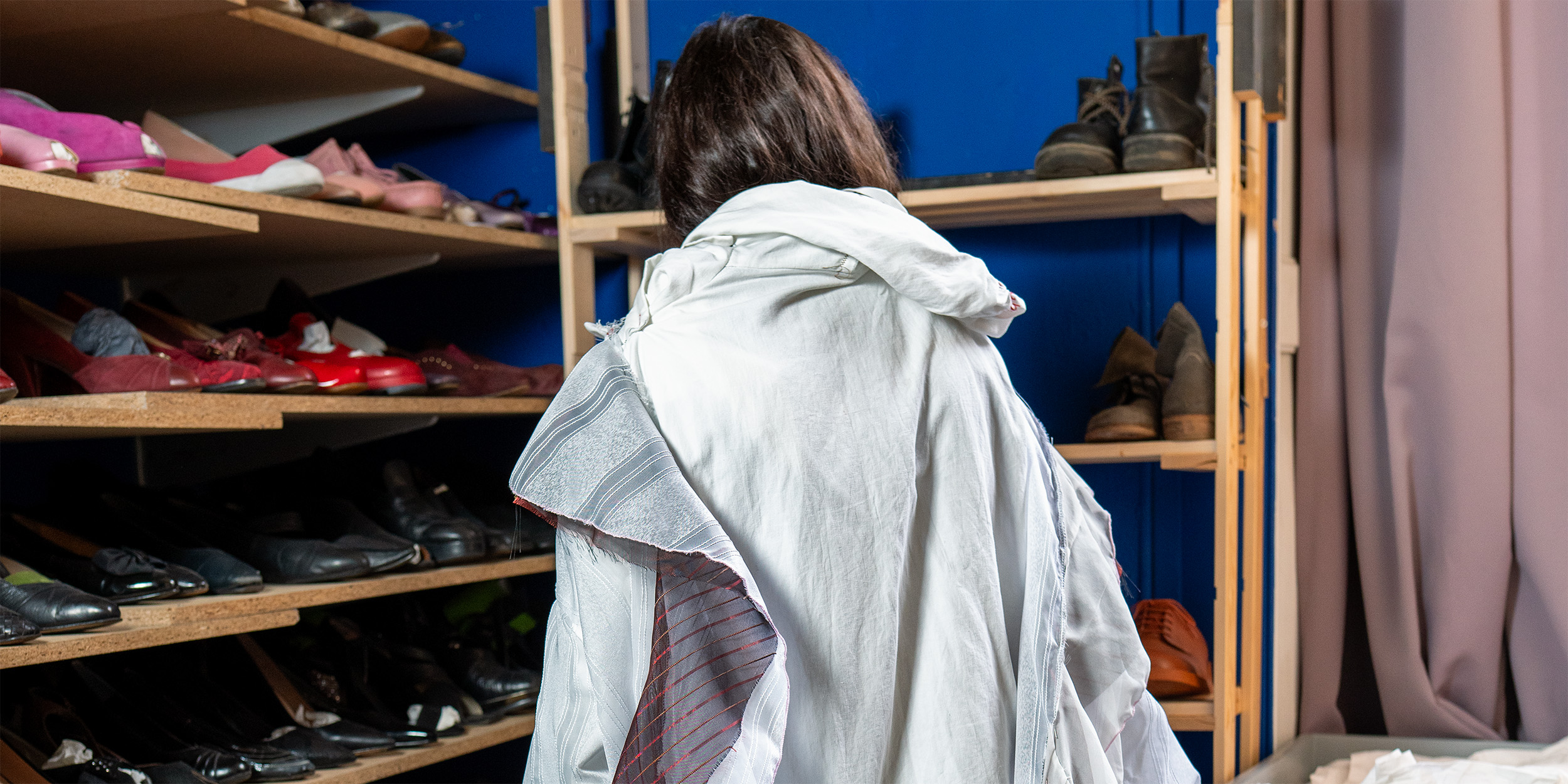
Process is an important part of Is Taste Real?. Looking, selecting, combining and experimenting give Madlani room to work without an established standard always sitting at the back of her mind. She remembers initially trying to make her work “perfect according to a desired standard”, before realising that the awkwardness and discomfort she had been trying to correct were part of what made the work her own.
Madlani is also aware that she now operates within some of the same structures she questions. She has studied at a private art institution and, as a designer, makes her own decisions about which materials, references and ways of making deserve attention and value.
“I see myself as very privileged,” she acknowledges. “There is definitely a fine line with how much you can criticise a system from within that system.”
That tension remains unresolved in Is Taste Real?, and perhaps it should. The collection isn’t proposing another definitive standard for good taste. Instead, it asks us to pay closer attention to the cultural and institutional frameworks that have taught us why one thing is sophisticated and another vulgar, why one reference signals knowledge while another doesn’t, and whose judgement carries enough authority to turn preference into a standard.
Madlani also thinks about the people who enter cultural spaces without having inherited their connections or codes. She wants Is Taste Real? to speak to those “trying to enter these worlds without having inherited the same cultural knowledge or connections,” and to remind them that not knowing the codes doesn’t mean they don’t belong there.
Her answer to the collection’s title has shifted too.
“So now, for me, the question isn't really ‘Is taste real?’ but ‘Who gets to decide what taste is?’”
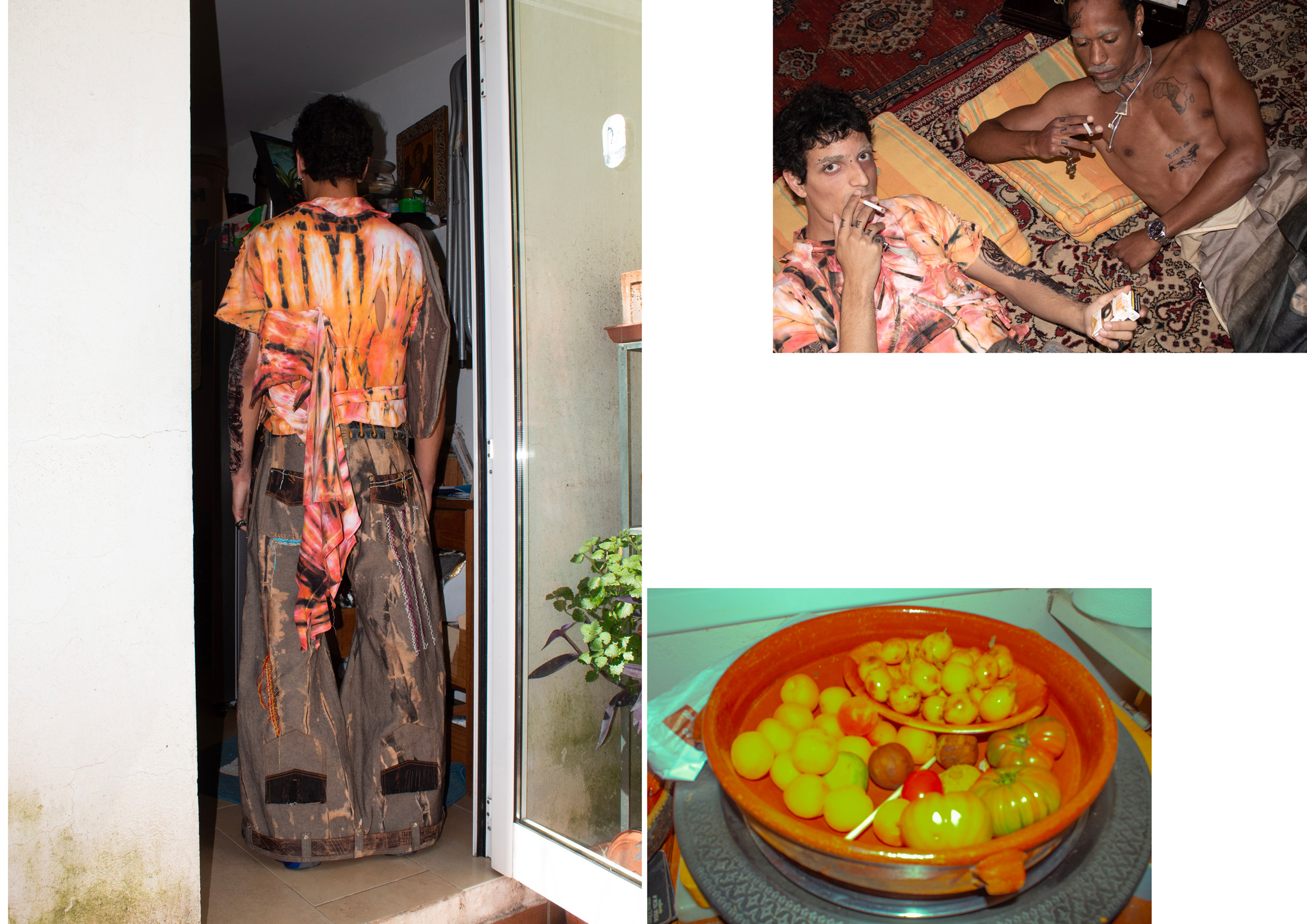
Fashion Designer and Creative Director- Simran Madlani @simimadlani @ransid.es
Stylist - Aoife Brown
MUAH- Isha Bukhari @ishakhaari
Martina Barriero @barr_martina
Models
Álvaro Metzker @alvarometzker
Anthony Charrot @antchbu_
Avie Manohar @saneinsane3_0
Giuliana Rojas @giulianaarojass
Photographers
Odelie Becerra @fotodelie
Mabel Suárez @mabelwsm
Assistance
Priscilla Piraino @priscinxed
Mercedes Harpe @mechitaharpe